Are Pre-Engineered Steel Buildings Actually Faster to Erect? A Real Timeline Breakdown
 Published On:
 If you have ever compared quotes for a new garage, workshop, or storage facility, you have probably heard someone say, “Steel buildings go up fast.” But what does fast actually mean?
When you factor in permits, engineering, fabrication, and foundation work, the answer might surprise you. Pre-engineered steel buildings are genuinely 30 to 50 percent faster to complete than conventional construction, but the speed shows up differently across each phase of the project. Read on, and you will have a clear, number-backed timeline you can actually use for planning.
What Makes Pre-Engineered Steel Buildings Different from Traditional Construction
Before we get into timelines, it helps to understand what pre-engineered actually means. Most people picture a simple kit of parts, but the engineering that goes into these buildings before they ever leave the factory is surprisingly sophisticated. That upfront work is exactly what makes the on-site portion so much faster than anything you can achieve with conventional framing or masonry.
The Factory-Built Advantage:
Every beam, column, purlin, and girt in a pre-engineered steel building is cut, drilled, primed, and tagged at a controlled manufacturing facility before a single truck leaves for your property. Nothing arrives on site requiring on-site cutting, welding, or custom shaping, so erection crews can bolt components together immediately upon delivery.
This eliminates the trial-and-error that plagues conventional construction, where materials often need field adjustments to compensate for measurement variations and unexpected site conditions.
The result is an assembly process that looks less like traditional construction and more like precision work at the building scale, where every piece has one defined location and fits exactly as designed.
Structural Components Are Fully Engineered Before Fabrication Begins
When you place an order for a pre-engineered steel building, a structural engineering team produces stamped drawings specific to your location, soil conditions, intended use, and local code requirements. These drawings account for dead load, live load, wind load, and seismic forces before a single piece of steel is cut, which means zero guesswork happens on the job site during erection.
This upfront engineering investment is what separates a genuine pre-engineered system from a generic kit building that requires significant field modification. Compare that to stick-frame or concrete block construction, where structural decisions are often made incrementally as the build progresses, each one creating a potential delay chain that ripples through the rest of the schedule.
The Real Phase-by-Phase Timeline: Actual Numbers
Numbers are more useful than vague promises, so here is an honest breakdown of each project phase and the realistic weeks each one takes from a typical residential to light-commercial project. The most important thing to understand before reading this table is that several phases run simultaneously, and that overlap is exactly what compresses the total timeline so dramatically compared to conventional builds.
Understanding the overlap is the single insight most buyers miss when they try to estimate their project window.
| Phase | Typical Duration | Runs In Parallel With | What Happens |
| Design and Engineering | 2 to 4 weeks | Nothing yet | Structural calculations, stamped drawings, permit package |
| Permitting | 2 to 8 weeks | Site prep, fabrication | Local authority review, zoning compliance check |
| Fabrication | 4 to 8 weeks | Permitting, site prep | Factory production of all steel components |
| Site Prep and Foundation | 1 to 3 weeks | Permitting, fabrication | Grading, anchor bolts, concrete pour, and cure |
| Delivery and Staging | 1 to 2 weeks | Final site inspection | Component logistics, sequence organization on site |
| Erection | 1 to 5 weeks | Interior rough-in | Frame assembly, panels, trim, doors, final bolt check |
| Total (realistic) | 11 to 30 weeks | Phases overlap heavily | Smaller, simple builds: 8 to 14 weeks total |
Design and Engineering Phase: Weeks 1 to 4
The design phase is where the speed advantage of pre-engineered buildings is quietly built in, long before a single component enters production. Structural engineers produce stamped drawings that are ready for permit submission and factory fabrication simultaneously, meaning there is no waiting period between design approval and production start.
Understanding how load, wind, and design work together at this stage explains why the engineering investment upfront pays off so dramatically during erection weeks later. A well-executed design phase eliminates almost all on-site problem-solving, which is the single biggest source of schedule overruns in traditional construction methods.
Permitting and Site Preparation: Weeks 2 to 10
Permitting is the most unpredictable phase of any steel building project and the one that causes the most frustration among buyers who expect to break ground immediately. Rural counties may turn around a permit in 2 weeks, while busy urban jurisdictions with backlogged review queues can take 3 months or longer, with no recourse available once your application is in the queue.
The smart move is to start site preparation work the moment you submit your permit application so that grading, utility routing, and anchor bolt layout proceed in parallel with the authority review process. Addressing building wind load requirements accurately in your initial submission is one of the most effective ways to avoid plan-check rejections that send your project back to the beginning of the review queue.
Fabrication and Delivery: Where Parallel Processing Changes Everything
While your permit application sits in a review queue and your site crew grades the ground, something important is happening hundreds of miles away at a manufacturing facility. Your building components are being fabricated to exact tolerances using computer-aided production equipment, and they will be ready to ship the moment your concrete is fully cured and inspected. This simultaneous activity is the real engine behind the pre-engineered speed advantage, and most buyers do not fully appreciate it until they see the project schedule mapped out side by side with a conventional build.
What the Factory Does While You Wait for Permits
Computer-controlled cutting equipment processes structural steel into precisely sized columns, rafters, purlins, and girts, each labeled with a unique component code that corresponds directly to the erection drawings your crew will use on site. Steel panels for the roof and walls are roll-formed, cut to length, and pre-punched so that field crews can fasten them without any measuring or field trimming.
Understanding wind load requirements as part of the fabrication process explains why no two pre-engineered buildings are identical even when they look similar from the outside, since each one is optimized for its specific wind zone, snow load, and occupancy category. This level of engineering customization at the factory stage is what makes field assembly so consistently fast and structurally reliable, project after project.
Delivery, Staging, and the Week Before Erection Starts
A standard steel building package typically arrives in 1 to 3 truckloads, and staging those components in the correct sequence on site saves the erection crew a significant amount of daily back-and-forth time. Most experienced erectors request a delivery sequence sheet from the manufacturer so that anchor bolt hardware arrives first, primary frames arrive second, and secondary framing and panels arrive last, matching the actual order of installation.
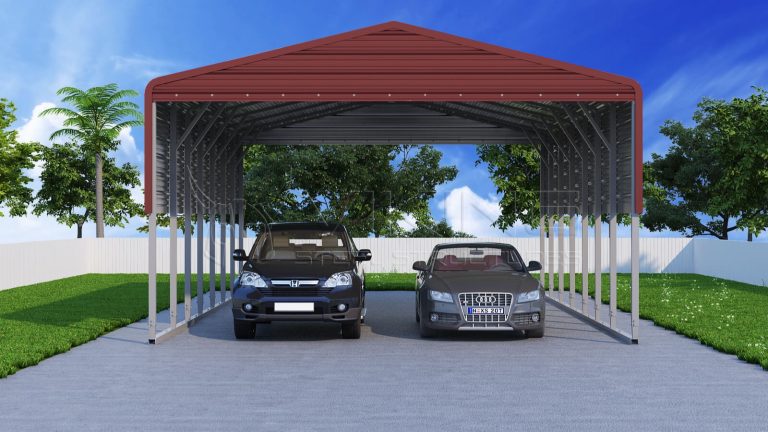
For buildings like the two-car carports with storage, the entire delivery is often a single load that arrives ready to begin erection within the same week, making the delivery-to-erection window as short as 2 to 3 days when the site is properly prepared and the crew is on standby.
Erection: This Is Where the Speed Becomes Visible
Once the foundation is poured, cured, and inspected, the erection phase begins, and this is where pre-engineered construction earns its reputation for speed. Watching a 40 by 60 steel building go from a bare concrete slab to a fully enclosed structure in under two weeks feels almost unrealistic compared to conventional framing timelines. But it is entirely normal when every component was manufactured to fit precisely, and the crew is experienced with the specific building system they are working with, which eliminates the improvisation that slows conventional framing crews at nearly every step.
The Erection Sequence for a Standard Steel Building
The erection process follows a logical structural engineering sequence that keeps the building stable and safe at every intermediate stage of assembly:
- Week 1, Primary frame: Columns and rafters are craned into position and bolted at the base plates and ridge connections, forming the rigid primary skeleton. A 40 by 60 building typically has all primary frames standing by the end of day two.
- Week 2, Secondary framing: Purlins (horizontal roof members) and girts (horizontal wall members) are installed between the primary frames, locking everything into position and providing the substrate for roof and wall panels.
- Weeks 2 to 3, Panels, trim, and doors: Roof and wall panels are fastened in overlapping rows starting at the eave and working toward the ridge, followed by trim, flashing, and overhead door installation.
- Weeks 3 to 5 on larger buildings: Insulation, interior partition accessories, and final punch-list items wrap up the project ahead of the final inspection and certificate of occupancy.
How Building Style and Roof Configuration Affect Erection Speed
Buildings with vertical roof panel orientation tend to drain debris and moisture more efficiently, and their vertical panel runs also install faster per square foot because alignment is more straightforward and requires fewer adjustment passes during installation. A simple open-span rectangular structure with no interior columns is the fastest configuration to erect because there are no interruptions to the panel runs and no special connection hardware to manage at mid-span. Adding interior walls, mezzanines, or lean-to wing attachments adds between 2 and 5 working days to the erection schedule for each major feature, depending on complexity and the size of the crew available.
What Can Delay a Pre-Engineered Steel Building Timeline
Speed is the headline for pre-engineered steel buildings, but delays still happen when certain key factors are not managed proactively. The good news is that most common delays are entirely predictable and preventable with early planning and good communication between the buyer, the manufacturer, and the erection crew. Knowing what they are before you start is often the difference between a 12-week build and a 22-week build.
The five most common delay triggers to plan around:
- Incomplete permit packages that trigger plan-check rejections and restart the full review clock, adding 2 to 6 weeks to the schedule.
- Anchor bolt layout errors on the foundation that require concrete breaking and repouring before erection can begin, costing 1 to 3 weeks.
- Unexpected soil conditions requiring upgraded foundation engineering, adding geotechnical testing and a redesign time of 2 to 4 weeks.
- Factory production backlog during the spring and summer peak building season, which can add 2 to 6 weeks to your fabrication lead time if you order late.
- High-wind weather windows closing during erection, particularly during panel installation when sheeting acts as a sail and becomes unsafe to handle above certain sustained wind speeds.
| Delay Factor | Typical Time Lost | Best Prevention Strategy |
| Permit rejection | 2 to 6 weeks | Submit complete, engineer-stamped drawings on first submission |
| Anchor bolt errors | 1 to 3 weeks | Triple-check bolt layout with manufacturer drawings before the pour |
| Factory production backlog | 2 to 6 weeks | Place orders during fall or winter off-peak season |
| Unexpected soil problems | 2 to 4 weeks | Commission a geotechnical report before the design phase |
| High-wind erection delays | 3 to 10 days | Build weather buffer days into your erection schedule |
Building Type and How It Changes the Erection Clock
Not all steel buildings are created equal in terms of erection speed. A simple storage structure and a multi-bay agricultural facility use the same fundamental pre-engineered components, but the layout complexity and number of unique framing conditions change the crew hours required by a significant margin. Matching your building type to a realistic timeline expectation before you commit to a delivery date prevents scheduling headaches and budget surprises downstream.
Simple Spans and Agricultural Structures
A basic open-span building with no interior columns is the fastest type of pre-engineered structure to erect, and a three-person crew can realistically have a 30-by-40 building fully enclosed in 5 to 7 working days under good conditions.
Steel livestock shelters fall into this category, typically featuring open sides or partially open configurations with simple roof framing and minimal trim work, which means erection often takes roughly half the time of a comparable fully enclosed building. Adding interior concrete aprons, utility rough-in conduits, or feed equipment anchor points adds time to the site work but does not significantly extend the steel erection phase itself, which remains among the fastest categories in the industry.
Lean-To Additions and Specialty Configurations
A lean-to metal building attached to an existing structure introduces secondary connection engineering challenges that add time to the erection schedule, typically 2 to 4 additional working days, depending on the condition and alignment of the existing wall that serves as the attachment point. Specialty configurations like monitor-style roofs, curved eave profiles, or multi-span arrangements require more craning cycles per square foot because each primary frame is unique and cannot be set using a repeating rhythm the way a standard single-span building can. For buyers planning these configurations, building a 20 percent time buffer into the erection estimate is a reasonable and widely recommended approach to account for the extra coordination required at connection points between standard and specialty framing.
Speed Is Built In, But Not Automatic
Pre-engineered steel buildings are genuinely faster to erect, and the real-world data backs it up consistently: 30 to 50 percent faster than conventional construction when you look at the full project lifecycle from design to occupancy. But that speed is not automatic or guaranteed.
It is the direct result of accurate engineering upfront, proper site preparation running in parallel with fabrication, a complete permit submission on the first attempt, and an erection crew that is experienced with the specific building system they are assembling.
Get those elements right, and your building can move from an empty slab to a fully enclosed structure in as little as 2 weeks. Get them wrong, and even the fastest construction system in the industry will stretch into months of frustrating delays that cost far more than a little extra planning would have.
Looking for a metal building that fits your needs?
