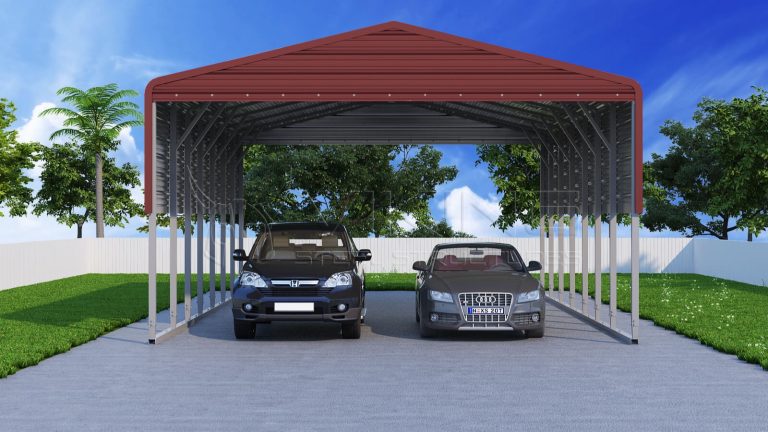
Steel buildings are everywhere today because they are flexible yet strong. How? What’s the science behind? What logics of physics are used? What’s actual engineering applied to steel buildings? Do you want to know it all in simple terms with fewer technical words and no jargon? We have explained everything in the blog below.
So, if you also think that strength simply comes from thick steel, you can get a reality check. In reality, the strength of steel buildings depends on how load, wind, and design work together as one system. We have clearly explained how these forces act on a building and how smart engineering keeps everything stable and safe. Do you want to explore?
Understanding Structural Load in Steel Buildings
Every building carries weight. In engineering terms, this weight is called “load.” A structure must safely support all loads during its entire lifespan, which may be 30, 40, or even 50 years. Loads are not just about the building’s own weight. They also include snow, equipment, people, and temporary forces. Let’s look at the different types of loads.
Dead Load (Permanent Load)
Dead load refers to the permanent weight of the building itself. This includes:
- Steel columns and beams
- Wall panels
- Roof panels
- Insulation
- Fasteners and connectors
For example, a typical steel building frame may weigh around 3 to 6 pounds per square foot, depending on design. Roof panels add additional weight. Even though steel is strong, it is relatively lightweight compared to concrete. That is why many modern metal structures are efficient without being overly heavy. Dead load is constant; it does not change over time.
📐
Quick reference: In the US, steel building wind loads are governed by ASCE 7-22, adopted into the 2024 International Building Code (IBC). Design wind speeds are measured in miles per hour (mph) as a 3-second gust at 33 feet above ground. They range from approximately 115 mph in sheltered interior regions to over 185 mph along the Gulf Coast and South Florida hurricane zone.
Live Load (Temporary Load)
Wind pushing directly against the walls and end frames. The primary force most people visualize — transferred through the rigid frame to the foundation.
Wind passing over the roof creates suction that tries to lift it off the building. Uplift often governs design at roof edges and corners — and drives anchor bolt sizing.
Wind hitting the end wall and traveling the building’s length. Resisted by X-bracing or rod bracing systems in designated bays along the structure.
Live load includes the weight that moves or changes. Examples include:
- People inside the building
- Stored materials
- Vehicles in a garage
- Maintenance workers on the roof
According to the International Building Code (IBC), a typical minimum roof live load in many areas of the United States is 20 pounds per square foot (psf). If a 30×40 building has a 1,200 square foot roof, the structure must support at least:
1,200 × 20 psf = 24,000 pounds of live roof load
That is more than 12 tons of temporary weight.
⚠️
Common specification mistake: Verifying the frame is engineered for MWFRS wind loads but never checking whether the roof panel fastening system meets C&C requirements at corners and edges. Always request the C&C pressure calculations as a separate document from any supplier.
Snow Load
In colder regions, snow adds significant pressure. However, snow load varies by location, so building installers need to be careful when installing metal buildings.
According to ASCE 7 standards, ground snow loads can range from:
- 20 psf in mild climates
- 30-50 psf in northern states
- 70 psf or more in heavy snow regions
Roof slope affects how much snow stays on the roof. A roof with a 3:12 pitch sheds snow better than a low-slope roof. This is why roof design matters, which we will discuss later.
Collateral Load
Collateral load refers to additional equipment attached to the building. This may include:
- HVAC systems
- Lighting systems
- Solar panels
- Suspended ceilings
US Interior — Most of the Continental United States
The Midwest, Mid-South, Pacific Northwest, Rocky Mountain interior, and most of the Northeast. Standard Risk Category II commercial steel buildings in this zone use conventional rigid frame designs with no special wind provisions. This covers the majority of US metal building projects.
Great Plains, Mountain Wind Regions & Special Wind Zones
Kansas, Nebraska, Oklahoma, parts of Texas and the Texas Panhandle, Southern California mountain passes, and Northern Colorado. These regions also overlap significantly with ASCE 7-22’s tornado-prone areas, triggering Chapter 32 tornado evaluation for Risk Category III/IV projects.
Gulf Coast & Atlantic Hurricane Zone — Texas Through North Carolina
The highest wind load requirements in the continental US. Miami-Dade and Broward Counties (South Florida) require up to 185+ mph for Risk Category II. Steel buildings in these areas need impact-rated cladding systems, enhanced anchor bolt design, HVHZ-compliant documentation (South Florida), and heavily reinforced frame connections.
These loads are often underestimated, but they must be included in engineering calculations. Now that we understand downward forces, we must look at horizontal and upward forces. Because wind is often more dangerous than weight.
How Wind Forces Affect Steel Buildings
Wind is not just moving air; it creates pressure, suction, uplift, and sideways force. These forces can cause structural damage if not properly calculated.
Wind Speed and Wind Zones
The United States uses ASCE 7 wind maps to determine design wind speed.
Frequently Asked Questions — Metal Building Wind Load
What does wind load mean for a metal building?
Wind load is the force that moving air exerts on a building’s surfaces — walls, roof, and frame. It includes positive pressure (wind pushing against the structure) and negative pressure or suction (wind pulling surfaces outward or upward). Both forces must be independently engineered.
In the US, wind loads are calculated under ASCE 7-22 and the 2024 IBC, expressed in pounds per square foot (psf). Design wind speeds are specified in miles per hour (mph) as a 3-second gust at 33 feet above ground.
How much wind can a metal building withstand
Standard metal buildings are designed for wind speeds starting at 115 mph, but can be reinforced to withstand hurricane-force winds up to 185 mph or more.
Which ASCE 7 edition currently applies to my project?
This depends on your local building code. ASCE 7-22 is the current standard, but some jurisdictions may still use ASCE 7-16 or 7-10.
What is the difference between Risk Category and Exposure Category?
Risk Category relates to the building’s use and the consequence of failure. Exposure Category describes the roughness of the surrounding terrain (Exposure B, C, or D).
What is wind uplift and why does it affect my foundation design?
Uplift is suction that tries to lift the building off its foundation. To counter this, engineers specify concrete footing size and anchor bolt depth.
How do I find the exact design wind speed for my project address?
You can find this using the ASCE 7 Hazard Tool or by contacting your local building department for site-specific requirements.
But for this, all components must work as a system. When buying a steel building, always review engineered drawings and certifications. Do not focus only on price, plan ahead at least 5-10 years, and avoid costly mistakes.
The Bottom Line
The science behind steel buildings is not complicated once you understand the basics.
Load, wind, and design work together like a chain. If one part is weak, the whole system suffers. But when engineering calculations follow recognized standards, steel buildings become one of the safest and most reliable construction solutions available today.
Strength is not just about thick steel. It is about smart engineering.
Get Your Metal Building Engineered to ASCE 7 Standards
Tell us your project address, intended use, and building size. We’ll provide site-specific wind load documentation, a PE-stamped engineering package, and a competitive quote — all engineered to your local ASCE 7-22 and IBC requirements.
Engineering Disclaimer:
This article is for general informational purposes and reflects ASCE 7-22 and IBC 2024 provisions as of April 2026. Building code adoption varies by jurisdiction — always confirm the applicable code edition with your local building department. Viking Steel Structures connects buyers with pre-engineered steel buildings and coordinates PE-stamped engineering documentation; structural engineering of record is performed by licensed PE firms. Consult a licensed structural engineer for project-specific design decisions.