Which Metal Building Roof Is Best for Your Climate? A State-by-State Guide
 Published On:
 If you have ever stood under a metal building during a hailstorm, or watched three feet of snow slide clean off a neighbor’s barn while yours held onto every inch of it, you already know that roof style is not just a design choice.
It is a decision that follows you around for the next twenty or thirty years, through every winter storm, every heat wave, and every hurricane watch. And yet most buyers spend more time picking a color than picking the roof style that actually has to survive their weather.
This guide walks through the three main metal roof styles used on buildings, carports, garages, and barns, and then breaks down which one tends to perform best depending on where in the country you live. Think of it as a weather-first way to shop, rather than a looks-first one.
Why Roof Style Matters More Than Most People Realize
The color and the panel gauge get most of the attention, but the actual shape of the roof, meaning how the panels run and how the ribs are formed, is what determines how well water, snow, and wind move off the structure.
A roof style that works beautifully in Arizona can struggle in Minnesota, and a design built for hurricane country is often more roof than you need in a calmer, drier climate.
We covered some of the structural differences between panel orientations in our post on vertical vs horizontal metal roofs, and the short version is that orientation alone can add years to a roof’s life in the right climate.
The Three Main Metal Roof Styles, Explained
Regular (A-Frame) Roof
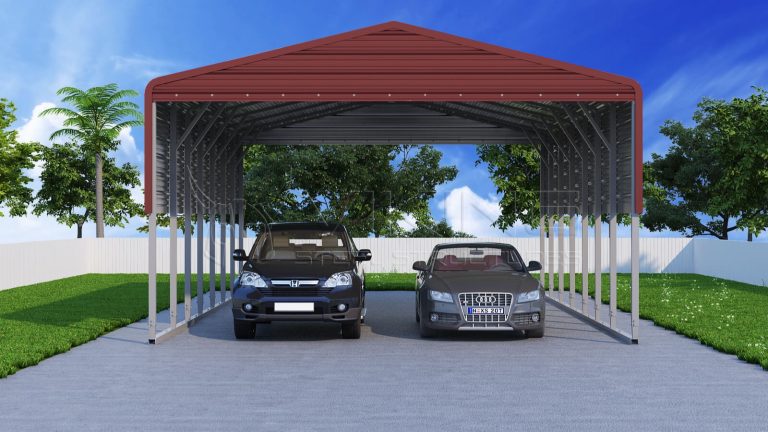
This is the classic triangular roofline most people picture when they think of a metal building. It is affordable, simple to engineer, and sheds light rain and moderate snow well enough for most of the country. You will find it most often on entry-level structures like a regular building or a regular carport, where the priority is a reliable roof at a reasonable price rather than maximum storm resistance.
Boxed Eave Roof
A boxed eave roof squares off the edges instead of leaving them open, which adds rigidity and gives the structure a cleaner, more finished appearance. That extra structure at the eaves also helps the roof handle wind-driven rain and gusty conditions a little better than a basic A-frame. It is a popular upgrade on a boxed eave roof carport, where buyers want both curb appeal and a bit more resilience against storms.
Vertical Roof
The vertical roof runs its panels straight up and down rather than side to side, with raised seams that lock the panels together. This design sheds snow and rain the fastest of the three, resists wind uplift the best, and tends to hold up longest in harsh, changeable weather. It is the standard choice for a vertical roof barn and for any building going up in a state that sees serious snow, wind, or both.
The Climate Factors That Should Actually Drive Your Decision
Heavy Snow Load:
Snow that sits on a roof for weeks adds weight the frame has to carry, and it is one of the most common causes of structural stress in northern states. A steeper pitch and raised seams, like you get with a vertical roof, help snow slide off before it accumulates.
Wind and Hurricane Exposure:
Wind does not just push against a roof, it tries to get underneath the panels and lift them. Boxed eave and vertical designs both resist uplift better than a basic A-frame because there are fewer gaps for wind to grab onto.
Extreme Heat and UV Exposure:
In desert climates, the bigger enemy is sun, not snow. Panels expand and contract with heat, and UV rays fade paint finishes faster. A well-ventilated, simple roof design tends to be enough here, without needing the extra engineering built for snow or hurricane country.
Rain, Humidity, and Coastal Salt Air:
Constant moisture, whether from rain or ocean air, speeds up corrosion if water is allowed to pool anywhere on the roof. Vertical seams drain faster and give rust fewer places to start.
Best Metal Roof Style by Region: A Quick Reference
Every state has its own quirks, but grouping them by climate pattern makes the decision much easier. Here is how it generally breaks down across the country.
| Region / States | Main Climate Challenge | Recommended Roof Style | Why It Works |
| Snow Belt (MN, WI, NY, ME, MI) | Heavy, wet snow load and ice damming | Vertical Roof | Steep panel seams and taller ribs let snow slide off before it piles up and stresses the frame. |
| Mountain West (CO, MT, WY, UT) | Deep snow plus strong gusts at elevation | Vertical Roof | Combines fast snow shedding with a raised seam that resists wind uplift on exposed sites. |
| Gulf Coast & Southeast (FL, LA, coastal TX) | Hurricanes, driving rain, salt air | Boxed Eave Roof | Squared-off eaves add structural rigidity and shed wind-driven rain away from the walls. |
| Tornado Alley (OK, KS, NE, TX Panhandle) | Sudden high winds and hail | Boxed Eave or Vertical | Both hold up well under wind load; vertical panels add extra seam strength against hail impact. |
| Desert Southwest (AZ, NV, NM) | Intense UV, heat, occasional flash storms | Regular (A-Frame) Roof | Simple, budget-friendly design that reflects heat well and needs little upkeep in dry climates. |
| Pacific Northwest (WA, OR) | Near-constant rain and humidity | Vertical Roof | Vertical seams reduce standing water and slow the rust that humidity encourages over time. |
| Mid-Atlantic (VA, NC, MD, DE) | Mixed snow, humidity, and occasional storms | Boxed Eave Roof | A balanced option that handles moderate snow and wind without needing a specialty design. |
Quick Comparison: Regular vs Boxed Eave vs Vertical
If you already know your region’s biggest weather risk, this side-by-side comparison should make the final call fairly straightforward.
| Roof Style | Snow Performance | Wind Rating | Maintenance | Best Suited For |
| Regular | Fair | Good | Low | Mild climates, garages, and budget-conscious buyers who don’t face heavy snow or hurricane-force wind. |
| Boxed Eave | Good | Very Good | Low to Moderate | Storm-prone regions and buyers who want a squared, finished look with added rigidity. |
| Vertical | Excellent | Excellent | Low | Snow-heavy states, high-wind zones, and anyone who wants the longest-lasting roof over time. |
Roof Considerations Change With the Type of Building
A roof style that makes sense for a small carport is not always the right call for a larger structure. A commercial metal garage, for example, usually carries a bigger footprint and a higher price tag, so it is worth leaning toward the more storm-resistant option even if your region only sees moderate weather, simply because there is more to protect and replacing a commercial roof later is far more disruptive than upgrading it at the time of purchase. Barns and workshops that store equipment or livestock deserve the same thinking, since a roof failure there tends to cost more than the roof itself.
How to Choose the Right Roof for Your State
- Start with your worst-case weather, not your average weather. A roof only earns its keep during the bad years, so plan for the heaviest snowstorm or strongest wind your area has actually seen, not just a typical season.
- Check your local snow load and wind speed requirements, since many counties have their own building codes that will narrow the choice for you before style even enters the conversation.
- Factor in long-term maintenance, not just the upfront price, because a slightly pricier vertical roof can outlast a cheaper A-frame by a decade or more in harsh climates.
- Match the roof to the building’s purpose, since a roof over daily-use equipment or livestock deserves more protection than one over an occasional-use carport.
If you are still weighing your options, or comparing financing and ownership paths alongside the roof style itself, our USA buyer’s guide for rent-to-own metal garages is a good next stop before you finalize your order.
Final Thoughts
There is no single roof style that wins in every state, and that is the point. The right choice depends on what your climate actually throws at your building year after year, not on what looks best in a brochure photo. Match the roof to your weather first, and the building underneath it will thank you for decades to come.
At Viking Steel Structures, our team can walk you through roof style, gauge, and engineering requirements specific to your state before you order, so your building is set up to handle whatever the season brings.
Looking for a metal building that fits your needs?