What “Pre-Engineered” Really Means — And Why It Changed Construction Forever
 Published On:
 Why does traditional construction take so long?
If you’ve ever built a warehouse, garage, workshop, or commercial space, you’ve probably faced the same problems. Delays because of rain. Rising labor costs. Concrete curing time. Material wastage. Constant coordination between contractors.
In this situation, you must have heard people saying, “Go for a pre-engineered building, it’s faster.” But what does that actually mean? Is it just another word for prefab? Is it as strong as RCC? Is it only for factories? Many questions come to mind.
Today, metal buildings are replacing traditional methods across the USA and beyond. They are pre-engineered structures, meaning their components are manufactured in a factory rather than on site, as in traditional buildings.
So, if you want to fully understand what makes pre-engineered construction different, read on. We have covered what “pre-engineered” really means, how pre-engineered buildings (PEB) are designed and installed, and why this approach completely changed modern construction.
What Does “Pre-Engineered” Actually Mean in Construction?
Before we talk about benefits, we need to understand the definition clearly.
A pre-engineered building is a structure that is designed, engineered, and fabricated before it reaches the job site. Instead of building everything from scratch at the location, most structural components are manufactured in a factory and then assembled on-site. The focus is on precision planning before execution.
-
The Core Concept Behind Pre-Engineered Buildings (PEBs)
The foundation of PEB is simple:
Design first. Manufacture second. Assemble third.
In a pre-engineered building system:
- Structural calculations are completed in advance.
- Steel members are fabricated in a controlled factory environment.
- Components are delivered ready for installation.
Primary members like columns and rafters are designed using optimized steel sections. Secondary members, such as purlins and girts, support roof and wall panels. Bracing systems are included to resist wind and seismic forces. All components are pre-drilled and pre-measured. When they arrive at the site, they are ready for assembly. And for their installation role of anchors and screws are crucial as it makes a structure strong.
Because fabrication happens in a factory, accuracy is high, quality control is strict, material wastage is low, weather does not affect production.
That is the real meaning behind “pre-engineered.”
-
How Pre-Engineered Differs from Traditional Construction
Traditional construction, especially RCC (Reinforced Cement Concrete), follows a build-from-scratch approach. Concrete is mixed on-site. Steel reinforcement bars are tied manually. Formwork is installed. Slabs and beams are cast and then cured for weeks. The entire structure grows gradually at the site. In contrast, pre-engineered steel buildings are manufactured first and assembled later.
Instead of casting concrete beams, steel beams are fabricated in a factory. Instead of welding everything on-site, high-strength bolted joints are used for quick installation.
The difference leads to:
- Faster construction timelines
- Less dependency on the weather
- Reduced labor intensity
- Better cost predictability
In simple words, RCC builds the structure on-site. PEB assembles a precision-designed steel structure on-site.
-
Why Steel Is the Backbone of Pre-Engineered Construction?
Steel is the main reason pre-engineered buildings (PEB) have grown so rapidly. In fact, the global pre-engineered buildings market was valued at USD 16.5 billion in 2024 and is projected to reach USD 40.94 billion by 2033, growing at a strong 11.8% CAGR during 2025-2033. That kind of growth doesn’t happen without a reliable material behind it, and that material is steel.
Reasons for steel being the backbone of pre-engineered construction:
First, steel has an excellent strength-to-weight ratio. It can handle heavy loads without requiring bulky sections. This makes it ideal for large-span metal buildings like warehouses and aircraft hangars.
Second, steel offers long-term durability. It resists termites, pests, and rot. With proper coatings and galvanization, corrosion can be controlled effectively.
Third, steel allows wide, clear spans. You can build large open spaces without internal columns. This is extremely important for industrial operations, storage, and agricultural use. However, some factors affect the lifespan of metal structures; knowing them will help you keep the structure in better condition for many years.
Because of these properties, steel structures became the preferred material for modern construction.
The Evolution of Construction – From Brick and Wood to Steel Structures
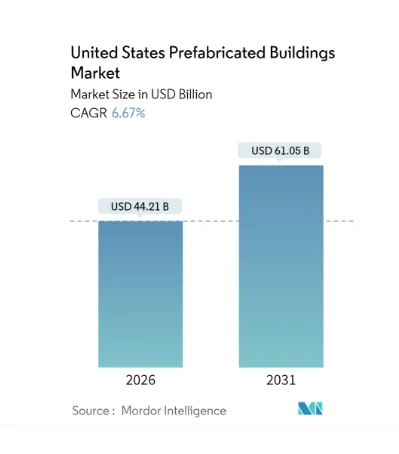
Construction has changed significantly over the last century. Pre-engineered structures have taken over most roles in building construction. This is why demand is increasing and the US market is booming.
-
Traditional Construction Challenges
Earlier construction relied mainly on brick, wood, and, later, RCC. While these materials worked well for residential homes, they created problems for large-scale industrial structures.
Traditional construction is:
- Labor-intensive
- Time-consuming
- Prone to cost overruns
- Sensitive to weather delays
Concrete needs curing time, and rain can stop work. Moreover, skilled labor shortages can slow progress, and material wastage increases overall cost. For industries needing fast expansion, this model was inefficient.
-
The Rise of Steel Buildings in the 20th Century
As industrialization grew in the United States and globally, factories and warehouses needed:
- Large open spaces
- Faster construction
- Stronger structural systems
Steel buildings became popular because they could span longer distances without interior supports. Standardized steel structures began appearing in factories, storage facilities, and industrial sheds. This reduced construction time compared to traditional masonry methods.
But even steel buildings were initially fabricated partially on-site. Then came the next innovation.
-
When Pre-Engineering Became a Game-Changer
Advancements in structural engineering software allowed engineers to calculate loads precisely. Instead of over-designing structures for safety, they could design exactly what was needed.
Mass production techniques improved steel fabrication. CNC cutting, automated welding, and quality-controlled manufacturing became common. This led to the rise of pre-engineered metal buildings.
Suddenly, steel structures were not just strong; they were optimized, efficient, and scalable. They expanded beyond factories into:
- Steel garages
- Metal barns
- Commercial spaces
- Retail outlets
- Agricultural buildings
Now, let’s understand how these pre-engineered buildings are actually designed and built.
How Prefab Metal Buildings Are Designed and Built
So how does a pre-engineered building actually come together?
Many people assume prefab or pre-engineered metal buildings are simply “assembled quickly,” but there’s a detailed engineering process behind that speed. From structural calculations and factory fabrication to anchor bolt placement and final installation, every step is planned before the first steel column is lifted on-site. You can design your building online and then confirm the final structure for installation.
Step 1: Structural Engineering and Custom Design
Every prefabricated steel building begins with a detailed structural design.
Engineers calculate:
- Dead loads (self-weight of the structure)
- Live loads (people, equipment, storage)
- Wind loads (critical in many U.S. states)
- Snow loads (important in colder regions)
- Seismic loads
Climate considerations play a major role in the construction of a steel structure. A prefab building in Florida must handle hurricanes. A structure in Minnesota must handle heavy snow loads. Based on these calculations, primary frames are designed. These rigid frames often use tapered sections, more steel where stress is high, less where stress is low.
If large spans are required, steel trusses may be used. Trusses distribute loads efficiently using triangular formations. Custom layouts are created for purposes such as warehouses, workshops, retail spaces, or agricultural storage.
Only after complete engineering approval does fabrication begin.
Step 2: Factory Fabrication of Steel Components
Fabrication takes place in a controlled manufacturing unit.
Steel plates are cut with CNC machines for accuracy. Welding is done under strict inspection. Holes for bolted connections are pre-drilled precisely.
Each member is labeled for easy identification during installation.
Quality control ensures:
- Correct dimensions
- Strong welded joints
- Proper surface coating
Since everything is manufactured in a factory, there is minimal material waste compared to RCC construction. This controlled fabrication process is one reason prefab structures are more efficient.
Step 3: On-Site Assembly and Installation
Before steel erection begins, the foundation, usually RCC, is completed. Anchor bolts are embedded into the concrete foundation. These anchor bolts connect steel columns to the base and transfer structural loads safely to the ground. Proper alignment of anchor bolts is critical for smooth installation.
Once steel components arrive on-site:
- Columns are lifted and fixed to anchor bolts.
- Beams are connected using high-strength bolted joints.
- Bracing systems are installed for lateral stability.
- Purlins and girts are fixed to support the roof and wall panels.
- Roofing sheets and wall cladding are installed.
Bolted joints make installation faster and safer compared to welding everything on-site. Because there is no curing time involved, the structure can progress rapidly. This significantly reduces overall construction time and labor requirements.
Why Pre-Engineered Metal Buildings Changed Construction Forever
While reading the above, you must be thinking it’s a long process. But it’s not that long. A metal building hardly takes 2-3 days to install, but a traditional structure takes more than a week, sometimes a month. Now, let’s understand the impact of pre-engineered construction across industries.
-
Faster Construction Timelines:
Projects that once took months can now be completed in weeks. So, businesses can start operations earlier, and startups can save valuable time. Time savings directly improve return on investment.
-
Lower Overall Costs:
One of the biggest advantages of pre-engineered construction lies in the hidden economics of prefab structures. At first glance, the price may look similar to traditional construction, but when you look deeper, the overall financial picture becomes much clearer and more favorable.
Cost reduction happens due to:
- Reduced labor
- Optimized steel usage
- Lower material wastage
- Shorter project timelines
-
Superior Strength and Durability
Pre-engineered steel structures are designed using precise calculations. With proper maintenance, many steel buildings last for decades.
These steel structures are:
- Resistant to pests
- Fire-resistant compared to wood
- Durable in extreme weather
- Reliable in seismic zones
-
Scalability and Flexibility
Need expansion later? Pre-engineered buildings allow additional bays or longer lengths more easily than RCC buildings. Steel garages, metal barns, and industrial warehouses can be expanded without rebuilding everything. That flexibility changed how businesses plan infrastructure.
Who Benefits Most from Pre-Engineered Steel Buildings?
If you were wondering who can use these structures, here is the answer. Well, this structure is for everyone who wants a robust, customized, and durable space.
- Homeowners: Homeowners use steel garages, workshops, and storage buildings for durability and low maintenance.
- Farmers and Agricultural Businesses: Metal barns, equipment sheds, and livestock shelters benefit from strength, pest resistance, and easy maintenance.
- Startups and Growing Businesses: Warehouses, retail spaces, and commercial metal structures allow quick setup and scalable growth.
- Commercial and Industrial Developers: Large distribution centers and manufacturing facilities prefer pre-engineered steel buildings because of faster completion and optimized cost.
Common Myths About Prefab Buildings (And the Truth)
Before you start investing in any pre-engineered building, go through some myths about them. So, you do not get confused at any stage.
-
“Prefab Means Low Quality”
In reality, pre-engineered structures are designed using strict engineering standards and load calculations. Factory fabrication improves quality control compared to on-site construction.
-
“They All Look the Same”
Modern PEB systems allow customization in height, width, roof slope, wall cladding, insulation, and interior layouts.
-
“They’re Only for Warehouses”
Today, prefab buildings are used in residential workshops, agricultural barns, commercial complexes, and even modern retail spaces.
The Smarter Way to Build Today
So, what is meant by pre-engineering? It means planning everything before construction even begins, designing, calculating, fabricating, and then assembling with precision. Pre-engineered steel structures deliver speed, strength, and scalability. With clear spans, the maximum PEB span can exceed 200 feet, depending on the design, resulting in lower waste and faster installation. Prefabricated metal structures are not just alternatives; they are the future.
If construction once felt slow and uncertain, PEB has changed the rules completely. Want to buy a prefabricated building and try its benefits? You can begin with a small steel structure, like a shed, by contacting experts at 877-801-3263 and exploring the Viking Steel Structures website.
Looking for a metal building that fits your needs?
