Why Customization Matters More Than Size When Planning a Building
 Published On:
 When planning a building, most people start with one question: “How big should it be?” Square footage feels measurable; it feels safe. You think bigger is better and only matters, but it’s not the only thing you need to think about when buying a building.
Size is only one variable. A 10,000 sq. ft. building that is poorly customized can underperform, deteriorate faster, and cost more long-term than a 6,000 sq. ft. structure designed correctly. Real performance depends on how the building is engineered for load, climate, workflow, soil, and future use.
This is why we have brought all the details of customization for you. Why customization matters more than size, and how proper engineering decisions define the lifespan and efficiency of modern steel structures.
Size vs. Customization – Understanding the Real Difference
When people compare buildings, they usually compare dimensions: 30×40, 50×80, 100×200. But dimensions only define the space volume. They do not define strength, stability, durability, or functionality. To understand why customization matters, we need to separate what size controls from what engineering customization controls.
In most modern metal building systems, size determines outer geometry, but customization defines internal performance. Let’s clarify this difference.
What Size Actually Controls
Size controls measurable physical parameters:
- Floor area (e.g., 5,000 sq. ft.)
- Clear height (e.g., 12 ft, 15 ft, 20 ft)
- Overall volume (length × width × height)
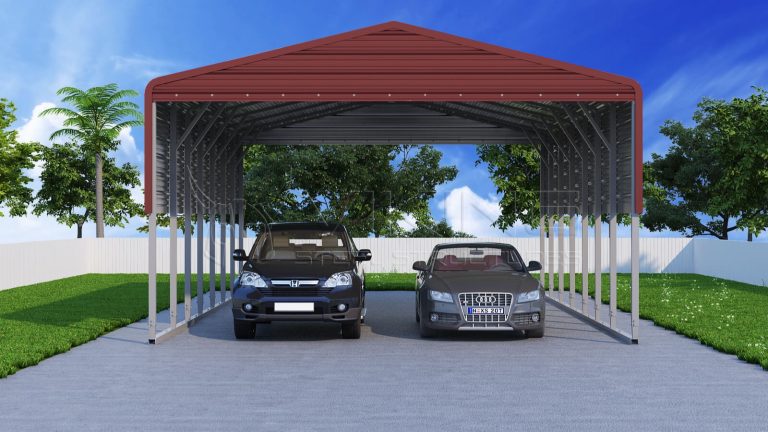
For example, a 3 car garage measures 24x55x15 with a vertical roof. It provides 1,320 sq. ft. of floor space and 15 ft. of vertical clearance. That tells you how much space you have, not how strong the building is.
Size does not automatically determine:
- Load capacity
- Wind resistance
- Snow load capacity
- Slab thickness
- Energy efficiency
That’s where customization enters.
What Customization Actually Controls
Customization defines how the building performs under real-world conditions. And what are those real-world conditions? Here they are:
- Structural load design (dead, live, wind, snow loads)
- Steel gauge selection
- Roof pitch design
- Ventilation systems
- Insulation R-value
- Foundation type
- Drainage planning
- Future expansion capacity
Performance vs. Volume
A useful way to understand this is suppose there are two buildings, both measuring 40x60x16.
Building A:
- Standard framing
- Light-gauge steel
- No climate adjustment
Building B:
- Wind-rated to 140 mph
- Snow load rated to 40 PSF
- Reinforced slab
- Proper ventilation and insulation
They look identical from the outside. Internally, they are engineered completely differently. Only one is built for long-term performance.
Structural Customization – Engineering the Building for Its Real Load
Structural design is the backbone of every metal building. Many building failures are not due to size miscalculation but due to poor load engineering. Structural customization ensures the building is designed to handle actual weight and environmental forces over time. Before choosing size, engineers calculate loads using standardized formulas.
Load Calculations (Dead, Live, Wind, Snow)
Structural loads are divided into four main types:
- Dead Load – Weight of permanent components (steel frame, roof panels, insulation).
- Live Load – Temporary loads (vehicles, machinery, stored goods).
- Wind Load – Lateral pressure from wind.
- Snow Load – Vertical pressure from accumulated snow.
For example:
- Light storage building: 20 PSF live load
- Heavy industrial warehouse: 125 PSF live load
- Snow-prone region: 30–70 PSF snow load
If a roof is not designed for a 40 PSF snow load and accumulates 12 inches of wet snow, which weighs roughly 20 lbs per cubic foot, in this case, roof deflection can occur quickly. Customization ensures structural members, rafters, columns, and beams are selected accordingly.
2. Framing System Selection
Different functions require different frame systems. A rigid frame system is ideal for large clear spans and suitable for warehouses and manufacturing. Post-frame construction is cost-effective for agricultural buildings. And I-Beam steel frames are used in heavy-duty steel structures. The steel frame Gauge also matters. In heavy-duty applications, 12 gauge steel is a gold standard because of its higher thickness and load resistance compared to 14-gauge or lighter options.
If two buildings are the same size but one uses lighter gauge steel, its load capacity reduces significantly. That difference defines durability.
Foundation Engineering Based on Soil Conditions
No building stands without a proper foundation. Choosing the best foundation for metal buildings depends on the soil type and the building’s use.
Common foundation types:
- Concrete Slab-on-Grade
- Pier Foundation
- Continuous Footing
- Monolithic Slab
Soil Bearing Capacity Example:
| Soil Type | Approx Bearing Capacity |
| Clay | 1,500–2,000 PSF |
| Sand | 2,000–3,000 PSF |
| Rock | 5,000+ PSF |
If the soil bearing capacity is 1,500 PSF and your column load exceeds it, settlement will occur. Customization ensures that footing width and depth are calculated correctly. This is also why timing matters. If you’re wondering how to prepare your site in January, frozen soil must be evaluated carefully. Excavation, compaction, and moisture control during winter directly affect foundation stability.
Example: Warehouse vs. Retail Store
Both buildings measure 8,000 sq. ft.
Warehouse:
- 6-inch reinforced slab
- 125 PSF live load design
- Clear span framing
- Heavy-duty columns
Retail Store:
- 4-inch slab
- 40 PSF live load
- Interior partitions
Functional Customization – Designing Around Workflow
Once structural integrity is secured, the next layer is functionality. Buildings should support movement, not restrict it. Workflow inefficiency can reduce productivity more than small space limitations. Customization ensures that the internal layout aligns with usage patterns.
Interior Layout Planning
For the interior planning of the building manufacturing unit, the manufacturing team needs to consider raw materials, production, and packaging techniques. They require wide aisle spacing (12–14 ft minimum). For the storage facility, vertical pallet racks are used, and the radius of forklift turning should be a minimum of 11–13 ft. If the layout is not customized, congestion increases, accident risk rises, and productivity drops.
Clear Span vs. Multi-Column Layout
Clear span structures eliminate interior columns. They offer flexible space, better equipment placement, and easier expansion. Multi-column layouts have a lower material cost and reduced beam size requirement. But the right choice depends on how owners want to use it, not just building size.
Door & Access Planning
Door width, height, and placement are strategic decisions. If you fail to decide on the accurate dimensions, it can be a big problem to accommodate items.
Example:
A 15 ft tall garage requires a 12 ft clearance door for RV storage. Incorrect sizing leads to operational limits. Here is what you need to consider before deciding on the size
- Vehicle turning radius
- Loading dock alignment
- Emergency exit code compliance
Climate & Environmental Customization
Climate is one of the most ignored yet critical factors in building planning. Two identical prefabricated buildings placed in Arizona and Michigan will perform differently without customization. Environmental design protects structure longevity and internal comfort.
Insulation of a Metal Building
Insulation is measured in R-value. Typical recommendations of R value are as follows:
- Warm climate roof: R-19
- Cold climate roof: R-30 to R-49
- Walls: R-13 to R-21
Without proper insulation, you might have to face several problems like energy bills increasing 25–40%, condensation forms, and interior temperature fluctuating.
Ventilation & Moisture Control
Many building owners underestimate why ventilation matters. They know ventilation protects structural integrity and stored assets. In metal buildings, the temperature difference between interior and exterior causes condensation on roof panels. Over time, this leads to corrosion and mold.
Solutions include:
- Ridge vents
- Soffit vents
- Exhaust fans
- Vapor barriers
Example: Cold Climate vs. Coastal Climate
Cold Region:
- Snow load reinforcement
- Steeper roof pitch
- Ice dam prevention systems
Coastal Region:
- Corrosion-resistant coatings
- Wind-rated anchoring systems (130–150 mph)
- Elevated foundations for flood zones
Material Customization – Performance Over Appearance
Materials define durability. Many buyers choose materials based on cost or appearance, but performance should guide decisions. Customization in materials directly affects lifecycle cost.
Steel Gauge Selection
Steel thickness significantly impacts strength.
- 12 gauge steel: Heavy-duty industrial use
- 14 gauge: Standard structural use
- 26–29 gauge: Roof panels
Using the best steel gauge means it balances durability, strength, and long-term resistance to deformation. Choosing thinner steel to reduce upfront cost often increases maintenance expense later.
Roof Pitch & Drainage Systems
Roof pitch affects water runoff and snow shedding. So you need to be careful when you are choosing the roof pitch for your building.
For example:
- 3:12 pitch → moderate slope
- 6:12 pitch → steep slope
Low slope increases ponding risk. Ponding adds weight load and increases leak risk. This is especially relevant in designs like the design secrets of step-down metal barn, where roof elevations change across sections. Proper drainage between height transitions is critical.
Corrosion Protection Systems
How to protect a metal building from corrosion? A lot of people have this question because they know rusting can deteriorate the structural integrity of a building. Go for the options below for a better space that doesn’t get affected by corrosion easily.
- Galvanized coating
- Galvalume
- Powder coating
If you live in a humid or coastal area, a corrosion-resistant treatment can extend the lifespan of your metal structure by 10–20 years.
Future Expansion & Scalability
Many building owners underestimate future growth. Expansion planning during initial customization reduces future structural modification costs. So, when you plan a customization, think of options that make future expansion easy.
For this, plan the following things:
- Designing end walls for expansion
- Oversizing foundations slightly
- Pre-planning electrical conduit routes
Cost Optimization Through Customization
Customization is often misunderstood as “extra expense.” In reality, it prevents long-term losses. Uniform engineering decisions ensure balanced cost allocation.
- Avoiding Overbuilding: Oversized beams and unnecessary reinforcements waste capital. Engineering calculations prevent excessive material use.
- Avoiding Underengineering: Undersized steel, thin slabs, and poor anchoring lead to:
- Structural deflection
- Water leakage
- Premature repairs
Repairs cost more than proper initial planning.
Long-Term Maintenance Savings
A properly customized metal building provides:
- Lower energy consumption
- Reduced structural repair
- Better resale value
- Extended structural lifespan (30–50 years)
Performance always pays back.
Real-World Case Study Comparison
Suppose two 5,000 sq. ft. buildings are constructed in the same region. Here are their specifications.
Building A:
- Basic framing
- Minimal insulation
- Standard slab
- No climate adjustment
Building B:
- Wind-rated frame
- Reinforced slab
- R-30 roof insulation
- Proper ventilation
- Corrosion-protected steel
What will you notice after 10 years?
Building A:
- Higher repair cost
- Rusting roof panels
- Energy inefficiency
Building B:
- Stable structure
- Lower maintenance
- Higher asset value
The difference was not in size; it was in customization.
Build for Performance Not Just for Space
So, when you plan a steel building, do not just focus on square footage limits. True building performance depends on structural engineering, climate adaptation, workflow alignment, and material selection. Size determines how much space you have. Customization determines how long that space serves you. If the goal is durability, efficiency, and long-term return, customization will always matter more than size.
Looking for a metal building that fits your needs?