Steel Garage vs Traditional Garage – Cost & Durability Compared in 2026
 Published On:
 Building a garage is a significant investment — and choosing the wrong type can cost you thousands in repairs, maintenance, and regret. With construction costs rising and material quality varying wildly, the decision between a steel garage and a traditional wood-built garage has never been more consequential.
This guide cuts through the noise. We’ll give you a clear, side-by-side comparison of cost, durability, maintenance, construction time, and long-term value — so you can make the right call for your property and budget.
Here’s exactly what we’ll cover: total cost comparisons for 2026, which garage lasts longer, which requires less upkeep, and which delivers better long-term ROI. Let’s get into it.
What Is a Steel Garage?
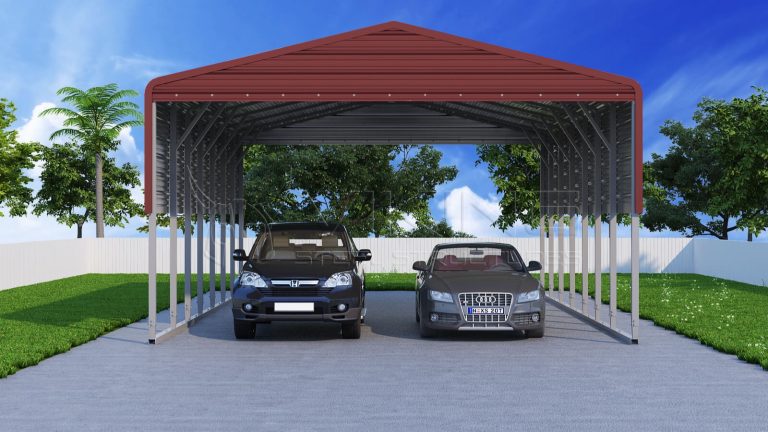
A steel garage is a prefabricated or custom-engineered structure built primarily from galvanized or Galvalume steel components, including a rigid frame, steel wall panels, and a metal roof. These structures are manufactured off-site to precise specifications and assembled on a prepared foundation, offering fast installation and exceptional structural strength.
Steel garages use a rigid frame or post-and-beam construction system. The main components — columns, rafters, wall panels, and roof sheets — are factory-fabricated and shipped directly to your site, where they’re assembled by a crew.
They’re used for everything from single-car residential garages and RV storage to large multi-bay commercial workshops. In recent years, demand for steel garages has surged among homeowners who want a durable, low-maintenance alternative to traditional construction.
Key reasons for growing popularity include faster build timelines, superior weather resistance, and — over the long haul — significantly lower maintenance costs than their wood counterparts.
What Is a Traditional (Wood-Built) Garage?
A traditional garage is a stick-built structure constructed on-site using dimensional lumber framing, wood or OSB sheathing, and a variety of exterior finishes such as vinyl siding, brick, or stucco. This is the most common garage construction method in residential U.S. neighborhoods and is typically handled by local contractors.
Stick-built garages are framed stud by stud on a concrete slab, with walls filled with batt insulation and covered in drywall or OSB. Roofing is typically asphalt shingles over wood decking.
Traditional garages are widely understood by contractors, mortgage lenders, and insurance companies, which has historically made them the default choice for homeowners. They can be attached or detached, and finishes can be matched easily to an existing home’s exterior.
However, the assumptions that wood-framed garages are automatically cheaper or more practical are increasingly being challenged by the rising costs of lumber and the documented durability advantages of steel.
Steel Garage vs Traditional Garage – Cost Comparison (2026)

Here’s the honest breakdown of what you can expect to pay in 2026:
Steel Garage Costs
- Basic prefab steel garage kit (shell only): $8 – $18 per square foot
- Completed steel garage (slab, assembly, basic finish): $25 – $55 per square foot
- 24×24 steel garage (finished): approximately $14,000 – $32,000
- 30×40 steel garage (finished): approximately $22,000 – $55,000
Traditional Wood Garage Costs
- Stick-built single-car garage (basic finish): $35 – $60 per square foot
- Standard 24×24 attached/detached garage: $20,000 – $40,000
- 30×40 detached workshop-style garage: $35,000 – $80,000
- Labor typically represents 40–50% of total cost
Material cost for steel garage has stabilized in 2026 compared to the volatile lumber market. Wood framing materials remain subject to supply chain fluctuations, which can cause traditional garage costs to shift significantly during your project.
Full Cost Comparison Table
| Cost Factor | Steel Garage | Traditional Wood Garage |
| Avg. cost per sq ft (finished) | $25 – $55 | $35 – $70 |
| 24×24 garage (complete) | $14,000 – $32,000 | $20,000 – $40,000 |
| 30×40 garage (complete) | $22,000 – $55,000 | $35,000 – $80,000 |
| Installation time | 1 – 3 days (kit) | 2 – 4 weeks |
| Foundation requirements | Concrete slab (standard) | Concrete slab (standard) |
| Maintenance cost (10 years) | $500 – $2,000 | $3,000 – $8,000 |
| Average lifespan | 50 – 100+ years | 25 – 40 years |
| Insurance cost trend | Often lower | Standard to higher |
Summary: Steel garage are often less expensive upfront and significantly budget-effective to own over time due to lower maintenance needs.
Durability Comparison – Which Garage Lasts Longer?

Durability is where steel garages most decisively outperform traditional wood construction. Here’s how they compare across the categories that matter most:
Steel Garage Durability
- Lifespan: 50 to 100+ years with minimal structural degradation. Factory-applied coatings protect against corrosion for decades.
- Fire Resistance: Steel is non-combustible. It will not ignite or contribute to the spread of fire, a major advantage in fire-prone regions.
- Pest Resistance: Termites, carpenter ants, and rodents cannot structurally damage steel. No fumigation or chemical treatments required.
- Rot and Mold: Steel does not rot or support mold growth within the structure itself.
- Wind Resistance: Engineered steel garages are designed to meet wind load ratings of 90–150+ mph depending on specifications.
- Snow Load Performance: Steel roofs handle heavy snow loads without the sagging or rafter damage common in wood-framed structures.
- Storm Durability: Steel garages consistently outperform wood structures in post-storm damage assessments.
Traditional Wood Garage Durability
- Lifespan: 25 to 40 years on average before major repairs or replacement are needed.
- Fire Resistance: Wood is combustible and contributes to fire spread. Fire-retardant treatments offer some protection but are not equivalent to non-combustible steel.
- Pest Vulnerability: Wood-framed garages are susceptible to termite infestation and carpenter ant damage, particularly in warmer, humid climates.
- Rot and Mold: Wood sill plates, sheathing, and framing members are vulnerable to moisture intrusion, rot, and mold — especially in garages where vehicles drip water in winter.
- Wind Resistance: Standard stick-built construction meets local code minimums but typically offers less resistance to extreme wind events than engineered steel systems.
- Snow Load: Wood rafters can sag or fail under heavy snow accumulation if not properly engineered for the local climate.
Summary: Steel garages last roughly twice as long as traditional wood garages and are more resistant to fire, pests, rot, and extreme weather.
Maintenance & Repair Costs Over Time

The true cost of a garage isn’t what you pay on day one — it’s what you pay over 10, 20, and 30 years of ownership. This is where the steel vs. wood comparison becomes particularly compelling.
Steel Garage Maintenance
- Painting: Steel buildings may benefit from a fresh coat of paint or touch-up every 15–20 years. Many modern systems use baked-on factory finishes that last decades.
- Rust Protection: Galvanized and Galvalume coatings provide long-term corrosion resistance. Occasional inspection and touch-up of scratches is all that’s typically needed.
- Roof Repairs: Metal roofs are extremely durable. Sealant around fasteners may need periodic inspection, but full roof replacement is rarely necessary within the first 30–40 years.
- Structural Wear: Steel frames do not warp, settle, or shift the way wood frames do over time.
Traditional Garage Maintenance
- Painting/Siding: Exterior wood siding needs repainting or restaining every 5–10 years. Vinyl siding fades and may need replacement after 15–20 years.
- Termite Treatments: Annual or biennial termite inspections and preventive treatments are recommended in warm climates, at $100–$400 per treatment.
- Roof Repairs: Asphalt shingle roofs need replacement every 15–25 years, at a cost of $4,000–$12,000 or more depending on size.
- Structural Repairs: Wood framing can develop moisture damage, rot in sill plates, and structural settling that requires targeted repairs over time.
Summary: Over a 10-year period, traditional garage maintenance can cost 3x to 8x more than a comparable steel garage.
Construction Time – Which Is Faster to Build?
Speed matters — especially if you’re paying rent on storage space or waiting to use your garage. Here’s how the two approaches compare:
| Factor | Steel Garage | Traditional Garage |
| Permit process | Standard local permits required | Standard local permits required |
| Framing/assembly time | 1 – 3 days (prefab kit) | 1 – 2 weeks (stick-built) |
| Full project completion | 1 – 3 weeks total | 4 – 8 weeks total |
| Weather delay risk | Low (fast assembly) | High (extended framing exposure) |
| Labor required | Small crew, shorter engagement | Larger crew, longer engagement |
| Prefab advantage | Yes – arrives ready to assemble | No – built piece by piece on-site |
Prefabricated steel garage arrive with components pre-cut and labeled. A small experienced crew can complete the structural assembly in one to three days. The remaining time is spent on concrete work, doors, windows, insulation, and electrical — all of which are shared requirements with traditional builds.
Summary: A steel garage can be structurally complete in days rather than weeks, reducing labor costs and weather-related delays.
Energy Efficiency Considerations
A garage’s energy performance matters if you heat or cool it for a workshop, gym, or living space. Steel conducts temperature more readily than wood, which means insulation strategy is particularly important.
- Steel Garage Insulation Options: Spray foam insulation applied to steel panels provides excellent thermal performance and eliminates condensation issues. Rigid board insulation and faced fiberglass batts are also commonly used. With proper insulation, a steel garage can achieve R-values comparable to any well-built traditional structure.
- Condensation Management: Uninsulated steel buildings can experience condensation in cold climates. This is resolved with vapor barriers and quality insulation — it is a solvable problem, not a fundamental flaw.
- Traditional Garage Insulation: Wood-framed garages use standard batt insulation between studs. This is familiar and effective but requires attention to air sealing to prevent drafts.
- Heating & Cooling Costs: Both garage types can be made highly energy efficient with the right insulation package. Budget $2,000–$8,000 for a quality insulation system in either type, depending on size and climate.
The bottom line: steel garages require intentional insulation — it’s not optional if you plan to condition the space. When properly insulated, they perform on par with or better than wood-framed alternatives.
Pros and Cons of Steel Garages
Pros
- Exceptional Longevity: Steel garages last 50 to 100+ years, far outpacing wood-framed alternatives.
- Low Maintenance: No painting schedules, no termite treatments, no rot remediation. Steel garages require minimal ongoing upkeep.
- Superior Weather Resistance: Engineered for high wind loads, heavy snow, and fire resistance. A clear advantage in storm-prone regions.
- Faster Construction: Prefab garage buildings significantly reduce assembly time and on-site labor costs.
- Pest-Proof: No risk of termite or rodent structural damage.
- Highly Customizable: Available in a wide range of sizes, colors, door configurations, and roof styles. Companies like Viking Steel Structures offer fully custom designs.
- Cost-Effective Long-Term: Lower lifetime ownership costs than traditional construction in most scenarios.
- Scalable: Easy to expand with add-on lean-tos or extensions in many designs.
Cons
- Insulation Is Required: Steel buildings must be properly insulated for conditioned use — this adds to the initial project cost.
- Financing Familiarity: Some lenders are less experienced with metal building loans, though this gap has narrowed considerably in recent years.
- Aesthetic Limitations in Some Markets: In neighborhoods with strict HOA rules or traditional aesthetics, a steel exterior may require additional cladding to blend in.
- Potential Condensation: Without proper vapor barriers and insulation, uninsulated steel buildings can experience condensation in cold climates.
Pros and Cons of Traditional Garages
Pros
- Aesthetic Familiarity: Easily matched to the existing home’s exterior. Widely accepted in residential neighborhoods and by HOAs.
- Financing Accessibility: Traditional construction is well understood by most mortgage lenders and appraisers.
- Attachment Flexibility: Easier to design as an attached garage with direct access to the home’s interior.
- Local Contractor Availability: Stick-built construction can be completed by virtually any local general contractor.
- Insulation Is Built Into Framing: Standard batt insulation fits naturally between wood studs without additional planning.
Cons
- Higher Long-Term Maintenance: Repainting, roof replacement, termite prevention, and structural repairs add up significantly over 10–20 years.
- Shorter Lifespan: Most wood-framed garages require significant renovation or replacement within 25–40 years.
- Weather Vulnerability: Wood-framed structures are more susceptible to hurricane, tornado, and wildfire damage than engineered steel buildings.
- Pest and Rot Risk: Susceptible to termite damage, moisture intrusion, and rot — particularly at the sill plate and lower wall sections.
- Volatile Material Costs: Lumber prices remain subject to supply chain disruptions, making budget control more difficult.
Which Garage Is Better for Your Needs?
The right choice depends on your situation. Here’s a practical breakdown:
Budget-Conscious Buyers: If minimizing upfront cost is the priority, a basic steel garage can undercut stick-built pricing. For the best total-cost outcome over 10+ years, steel is almost always the better value.
Rural Landowners: Steel is the clear winner for rural properties. It handles the wear of agricultural environments, resists pests, and requires far less maintenance on a large parcel with no contractor nearby.
High-Wind Zones (Tornado Alley, Gulf Coast): Engineered steel garages are purpose-built for high wind loads. For buyers in storm-prone regions, steel offers meaningfully better protection and lower post-storm repair costs.
Coastal Areas: Coastal environments require corrosion-resistant materials. High-quality galvanized steel with appropriate coatings performs well in coastal settings, while wood is highly susceptible to moisture damage in salt-air environments.
Long-Term Property Investors: Steel’s 50–100-year lifespan, lower maintenance, and fire resistance make it the better investment for property owners thinking in decades, not years.
Homeowners Seeking Attached Garages: Traditional construction has some advantages here for matching the home’s existing exterior. However, steel garages with proper exterior finishing and cladding can also be attached and matched aesthetically.

Final Verdict – Is a Steel Garage Worth It in 2026?
Yes — for the vast majority of buyers, a steel garage is the smarter long-term investment in 2026.
It delivers superior durability, resists pests, fire, rot, and extreme weather, and requires dramatically less maintenance over its lifetime. While upfront costs are comparable — and sometimes higher for heavily finished builds — the total cost of ownership over 20 to 40 years consistently favors steel.
The only scenarios where traditional construction clearly wins are highly regulated HOA environments where metal exteriors aren’t permitted, or situations where an attached garage must match an existing wood-framed home’s structure exactly.
For everyone else — rural landowners, workshop builders, property investors, and anyone in a storm-prone region — steel is the obvious choice.
Build a Better Garage with Viking Steel Structures
Viking Steel Structures specializes in high-quality, fully customizable steel garages and metal buildings for residential, commercial, and agricultural use. Whether you need a single-car garage, a multi-bay workshop, or a large RV storage structure, their team can design and price a solution built to your exact specifications.
With durable engineered steel, fast delivery, and a range of sizes and configurations, Viking Steel Structures makes it straightforward to get a garage that will outlast, out-perform, and out-save a wood-framed alternative.
FAQs About Steel Garages vs Traditional Garages
Is a steel garage cost-effective than a traditional garage?
Steel garages often cost less per square foot than stick-built construction, particularly when comparing material costs. Fully finished steel garages are competitive with or slightly below traditional garages in most markets. The stronger financial argument is in long-term ownership: steel garages require significantly less maintenance, reducing total cost over 10 to 30 years.
How long does a steel garage last?
A properly constructed steel garage built with quality galvanized or Galvalume steel components can realistically last 50 to 100 years or more. The steel frame itself is resistant to the biological and environmental factors — rot, pest damage, moisture — that degrade wood frames over time. This extended lifespan is one of the most compelling arguments for steel construction.
Are metal garages good in cold climates?
Yes, when properly insulated. Steel garages in cold climates require a quality insulation system — typically spray foam or rigid board insulation — to prevent heat loss and manage condensation. With the right insulation package, a steel garage performs excellently in cold climates and can maintain comfortable working temperatures with efficient heating systems.
Do steel garages rust?
Modern steel garages are built with galvanized or Galvalume-coated steel, which is engineered to resist rust and corrosion for decades. In standard residential environments, rust is not a practical concern with quality materials and proper installation. In coastal or high-humidity settings, additional protective coatings may be recommended. Rust-related structural failure in a well-built steel garage is extremely rare.
Can you attach a steel garage to a house?
Yes. Steel garages can be designed and installed as attached structures with direct access to an existing home. The connection point requires proper flashing and weatherproofing. For aesthetic matching, the steel exterior can be clad with siding, brick veneer, or stucco to blend with the home’s existing look. This requires additional planning and cost but is a practical solution.
Does a steel garage increase property value?
A well-finished steel garage can positively impact property value, particularly in rural areas or markets where workshop and storage space is highly valued. Appraisers are increasingly familiar with metal buildings as permanent structures. The durability and longevity of steel may be viewed favorably compared to an aging wood-framed garage. Local market conditions and finish quality are the primary factors.
Looking for a metal building that fits your needs?