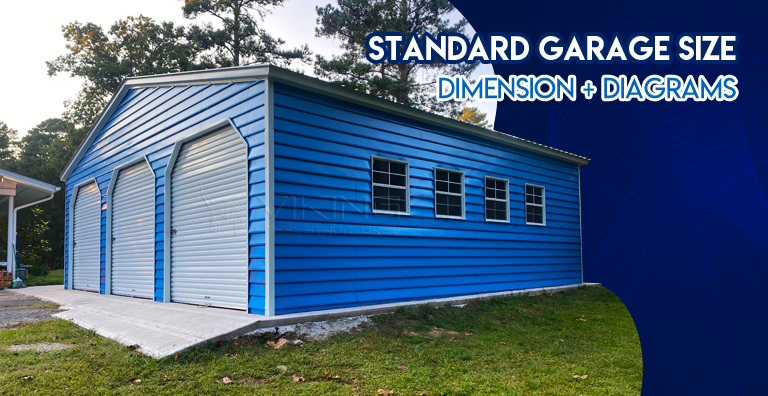
Standard Garage Size: Dimension + Diagrams
 Published On:
 Choosing the right garage size is one of the most important decisions you’ll make when building or upgrading your property. Build too small and you’re constantly maneuvering your truck through a tight squeeze, sacrificing storage for parking space, and regretting every door ding. Build with the right dimensions in mind, and you’ve created a functional, comfortable space that serves you for decades.
This guide covers standard garage sizes for 1, 2, 3, and 4 car configurations — including minimum dimensions, comfortable recommendations, standard garage door sizes, ceiling heights, and vehicle-specific guidance. Whether you’re planning a new metal garage, evaluating your existing space, or designing a multi-use structure, the information here will help you make an informed, confident decision.
Quick-Reference: Standard Garage Sizes at a Glance
Before diving into the detail, here’s the overview you need:
| Garage Type | Minimum Size | Standard Size | Recommended Size | Sq Ft (Recommended) | Door Width |
| 1-Car | 10×18 ft | 12×20 ft | 14×22 to 16×24 ft | 308–384 sq ft | 9–10 ft wide |
| 2-Car | 20×20 ft | 22×22 ft | 24×24 to 24×30 ft | 576–720 sq ft | Two 9-ft or one 16-ft |
| 3-Car | 30×20 ft | 32×22 ft | 36×24 ft | 864 sq ft | Three 9-ft or one 24-ft |
| 4-Car | 40×20 ft | 40×22 ft | 40×30 ft | 1,200 sq ft | Four 9-ft or two 16-ft |
Note: Dimensions listed as Width × Depth. These are interior floor dimensions. Always add 2–4 feet beyond minimum for comfortable door opening clearance and storage access.
Standard 1-Car Garage Size
A single-car garage is the most compact protected parking option for a residential property. The right size depends heavily on the vehicle you drive — and, critically, how you plan to use the remaining space.
Minimum 1-Car Garage Dimensions: 10×18 Feet
A 10×18 foot garage (180 sq ft) is the smallest you’ll encounter. This tight configuration technically fits a small sedan or compact hatchback, but it leaves zero room to open your doors comfortably, store anything, or move around the vehicle. Use this size only as an absolute last resort when land or budget constraints make a larger structure impossible.
Standard 1-Car Garage Size: 12×20 Feet
The most common standard single-car garage dimension is 12 feet wide by 20 feet deep — approximately 240 square feet. This is the baseline size that fits most sedans, midsize SUVs, and compact trucks. You’ll have just enough room to open your doors without hitting the walls, walk around the front and back of the vehicle, and hang a few tools on the walls.
If your vehicle is longer than 18 feet — which includes most full-size trucks and large SUVs — a 20-foot depth is too shallow. Your bumper may prevent the garage door from closing, especially if you have a door opener rail.
Recommended 1-Car Garage Size: 14×22 to 16×24 Feet
If you can extend beyond the minimum, aim for a 14×22 or 16×24 foot garage. These sizes unlock significantly more usability:
- A 14×22 (308 sq ft) lets you install a wall-mounted workbench along one side while still parking comfortably.
- A 16×24 (384 sq ft) is often called an ‘oversized one-car garage’ — it fits a full-size pickup with room for a 10-foot workbench along the entire back wall.
Real-world insight: Many customers who order a 12×20 garage return within a few years to upgrade. The extra few hundred dollars spent on a 14×22 upfront almost always proves worthwhile. Plan for your future vehicle, not just your current one.
Standard 1-Car Garage Door Size
A standard single-car garage door is 9 feet wide by 7 feet tall. If you drive a full-size pickup or have roof accessories (roof rack, cargo box, camper shell), consider upgrading to a 10-foot-wide by 8-foot-tall door. This provides noticeably easier clearance and eliminates that nerve-wracking slow crawl through a tight door opening.
Standard 2-Car Garage Dimensions
Two-car garages are by far the most common configuration in American residential construction — and for good reason. They offer flexibility to park two vehicles, store seasonal items, and carve out dedicated workspace. Getting the sizing right is critical; a 20×20 garage that looks sufficient on paper often proves frustratingly cramped in daily use.
Minimum 2-Car Garage Size: 20×20 Feet
The absolute minimum for two vehicles is 20 feet wide by 20 feet deep (400 sq ft). Two compact cars can fit here, but you’ll be opening doors carefully, climbing out sideways, and sacrificing virtually all storage space. Modern vehicles — even midsize sedans — are wider than cars from 20 years ago. A 20×20 garage built for a 1990s household is often too tight for a 2020s one.
Standard 2-Car Garage Size: 22×22 to 24×24 Feet
A 22×22 (484 sq ft) or 24×24 (576 sq ft) garage is the practical sweet spot for most households. The extra width provides a meaningful walking lane between the vehicles — approximately 2.5 feet — and the extended depth gives you rear storage space behind your vehicle bumpers.
At 24 feet wide, two full-size sedans park side by side with comfortable door-opening clearance. Two 9-foot-wide doors (one per car) is the recommended door layout at this width, giving each driver independent access.
Recommended 2-Car Garage for Trucks and Large SUVs: 24×30 Feet
If your household drives full-size trucks, SUVs, or minivans — all of which run 6.5 to 7 feet wide and 17 to 22 feet long — a 24×30 foot (720 sq ft) garage is the real minimum for comfortable daily use. The 30-foot depth provides a 6–8 foot buffer behind each vehicle for a dedicated storage zone, workbench, or chest freezer.
For reference, a full-size Ford F-150 is approximately 6.8 feet wide and 19.5 feet long. A 20-foot-deep garage barely contains it. A 24-foot depth keeps the door functional and leaves walking clearance.
2-Car Garage Door Configuration
Two options work well for a standard two-car garage:
- Two individual 9-foot doors: Allows independent access to each vehicle. Best choice if the cars arrive and leave on different schedules.
- One 16-foot double door: Simpler aesthetic, lower installation cost, but both vehicles must navigate the same opening.
For trucks or SUVs, consider 10-foot-wide individual doors or a single 18-foot door for extra clearance.
Standard 3-Car Garage Dimensions
A three-car garage is increasingly popular with growing families, collectors, or homeowners who want dedicated workshop space alongside parking. Planning this configuration correctly requires thinking beyond just ‘three cars fit’ — you need door access, clearance, and use zones to work harmoniously.
Minimum 3-Car Garage Size: 30–32×20–22 Feet
The minimum three-car garage configuration is approximately 30–32 feet wide by 20–22 feet deep (660–704 sq ft). Three standard sedans can physically fit, but practical daily use will feel cramped. The narrower bays leave little room for door swings, and the limited depth leaves no storage zone behind the vehicles.
Recommended 3-Car Garage Size: 36×24 Feet
A 36×24 foot (864 sq ft) configuration is the industry recommendation for modern vehicles. The added width provides approximately 12 feet per vehicle bay — enough for a 9-foot door plus wall clearance. The 24-foot depth accommodates full-size trucks and provides a rear storage buffer.
If two of the three vehicles are full-size trucks or SUVs, consider stretching to 40×24 feet. This gives each bay the 13+ feet that large vehicles demand for comfortable entry and exit.
Standard 4-Car Garage Dimensions
Four-car garages are typically built by collectors, multi-vehicle households, or property owners who want a substantial workshop alongside their parking. These structures frequently serve dual purposes — vehicle storage plus hobby shop, home gym, or rental accessory dwelling unit (ADU).
Standard 4-Car Garage Size: 40×20 to 40×30 Feet
A standard four-car garage starts at 40 feet wide by 20 feet deep (800 sq ft minimum). This fits four compact-to-midsize vehicles side by side, each with a 10-foot-wide bay. For most modern households, a 40×30 foot (1,200 sq ft) configuration is the practical recommendation — the extra depth creates a genuine workshop zone or storage corridor behind the parking bay.
At this scale, structural design matters enormously. A clear-span metal building is a popular choice because it eliminates internal support columns that would otherwise intrude into the parking or storage zones.
Standard Garage Door Sizes
The garage door is, in many ways, more important than the garage walls. A door that’s too narrow or too short for your vehicle makes the entire structure frustrating to use daily.
Single Garage Door: 9×7 Feet (Standard)
The standard single garage door measures 9 feet wide by 7 feet tall. This fits most sedans, compact SUVs, and smaller trucks. Older homes sometimes have 8-foot-wide doors — these are uncomfortably tight for modern vehicles and should be widened during any renovation.
Double Garage Door: 16×7 Feet (Standard)
A double garage door — spanning two vehicle bays — is typically 16 feet wide by 7 feet tall. This is the standard for a 2-car configuration using a single opening rather than dual individual doors.
Oversized Garage Doors for Trucks, RVs, and Boats
Full-size trucks benefit from a 10-foot-wide door rather than the standard 9-foot. For RVs, boat trailers, or raised vehicles, an 8-foot-tall door is the minimum, with many owners opting for 9 or even 10-foot-tall doors. RV storage garages typically require doors 12–14 feet tall and 12–16 feet wide.
Standard Garage Ceiling Height
Ceiling height is the most overlooked dimension in garage planning — until the day you try to park a lifted truck or install a car hoist.
Standard Garage Ceiling Height: 8–9 Feet
Most residential garages have an 8-foot finished ceiling height. This works comfortably for standard passenger vehicles and provides adequate space for a 7-foot garage door plus the tracking hardware above it. A 9-foot ceiling is increasingly popular in new construction, providing more headroom without a significant cost increase.
Ceiling Height for Trucks, Lifts, and Storage
If you plan to install a two-post or four-post car lift, you need a minimum ceiling height of 11–12 feet — and 14 feet is more comfortable. For overhead storage systems (ceiling-mounted platforms, ceiling bike racks), a standard 8-foot ceiling works, but 9–10 feet gives you more storage depth without bumping into hanging items when walking below.
Garage Door Opener Headroom Requirements
Most garage door openers require at minimum 2 inches of clearance above the door’s highest travel point. For a standard 7-foot door in a standard 8-foot ceiling, this is typically achievable. If you’re installing a 8-foot door in an 8-foot ceiling, you may need a low-headroom conversion kit or a jackshaft-style opener that mounts on the wall beside the door rather than on the ceiling track.
Garage Size by Vehicle Type — Real-World Planning Guide
One of the most practical ways to approach garage sizing is to start with your specific vehicles and work outward.
Garage Size for a Full-Size Truck
Full-size trucks like the Ford F-150, Chevrolet Silverado, and Ram 1500 measure approximately 6.7–7.0 feet wide and 19–22 feet long depending on cab and bed configuration. For comfortable single-truck storage, the minimum recommended garage is 14×24 feet. A two-truck garage needs 28–30×24 feet minimum, and ideally 32×26 feet for daily ease.
Garage Size for an SUV or Minivan
Full-size SUVs (Chevrolet Suburban, Ford Expedition) and minivans (Toyota Sienna, Honda Odyssey) typically run 6.5–7.0 feet wide and 17–19 feet long. A 12×22 foot garage is the minimum; 14×24 is comfortable.
Garage Size for an RV
RV storage is a specialized need. A Class A motorhome (the largest type) can be 8.5 feet wide and up to 45 feet long. Even a smaller Class C RV is typically 7–8 feet wide and 25–35 feet long. RV storage buildings are generally planned as 14–16 feet wide, 12–14 feet tall, and 40–50 feet deep — far beyond a standard residential garage. Viking Steel Structures’ metal RV cover and RV garage options can be custom-sized for your exact motorhome dimensions.
Garage Size for Motorcycles or ATVs
A standard motorcycle or ATV takes up far less space than a car, but most owners want dedicated workshop space alongside storage. A 12×16 foot mini-garage or utility building can comfortably hold 2–3 motorcycles with a workbench. For a small ATV fleet, a 20×20 foot structure gives parking plus adequate work space.
Garage Size for Different Uses
Garage + Workshop Combination
One of the most popular multi-use garage configurations is the parking + workshop combo. For a two-car garage with a full workshop, plan for 24×36 feet minimum. This gives you a 24×24 parking zone and a 24×12 foot dedicated workshop with full wall access for tool storage, a 6-foot workbench, and floor space for a table saw and drill press.
Garage with Home Gym
A garage gym needs approximately 200–350 square feet depending on equipment. A 24×30 foot two-car garage can comfortably split into a two-car parking zone and a functional home gym, with the gym occupying the rear third of the space. Insulation and climate control become important considerations for year-round usability.
Garage with Storage-Only Zone
Many homeowners add just 4–6 feet of extra depth to their planned garage dimensions to create a dedicated storage buffer. A 24×30 garage versus a 24×24 gives you an additional 144 square feet — enough for holiday décor, seasonal equipment, a chest freezer, and lawn maintenance tools without ever crowding the vehicle parking zone.
Attached vs. Detached Garage — Does Size Differ?
The short answer: the interior dimensions of attached and detached garages are essentially the same. But their planning considerations differ.
Attached Garages
An attached garage shares a wall with the main dwelling. Building codes typically require fire-rated walls between the garage and living space (5/8-inch Type X drywall is common), a self-closing fire door, and in many jurisdictions, specific electrical requirements. These structural requirements don’t change the footprint, but they affect the finish cost. Ceiling height in an attached garage is often limited by the adjacent home’s floor-to-ceiling dimensions — typically 8–9 feet.
Detached Garages
A detached garage stands independently from the house. This gives you more flexibility on ceiling height, exterior finish, and use — a detached garage can be converted to a workshop, ADU, or office without the fire-code concerns of an attached structure. Metal detached garages from Viking Steel Structures are available in custom widths, lengths, and heights, with vertical roof options that shed snow and rain more efficiently than horizontal designs.
Why Metal Garages Give You More Size Flexibility
Traditional wood-framed garages are constrained by standard lumber dimensions, rafter spans, and the time and labor involved in on-site construction. Metal garages — particularly prefab steel garages — are engineered in flexible modular increments, allowing you to specify exactly the width, depth, and height you need, rather than conforming to a builder’s standard templates.
- Width: Metal garages from Viking Steel Structures can be built from 12 feet to 60+ feet wide in custom increments.
- Depth: Standard depth options run from 20 to 60+ feet. Custom depths are available.
- Height: Leg heights from 6 to 16 feet are common; taller configurations are available for commercial applications or RV garages.
- Roof styles: Regular, boxed eave, and vertical roof styles — vertical is recommended for regions with heavy snow or rain.
- Delivery and installation: Factory-built components arrive ready to assemble, reducing on-site build time versus traditional framing.
Whether you need a tight 12×20 single-car garage or a sprawling 40×60 four-car workshop, Viking Steel Structures’ metal garages are built to your exact specifications — not to a builder’s standard catalogue.
Frequently Asked Questions — Standard Garage Sizes
Q: What is the most common standard garage size?
A: The most common residential garage size in the United States is the 2-car garage, typically 20×20 feet (minimum) to 24×24 feet (comfortable). For single-car garages, 12×20 feet is the standard — though 14×22 or 16×24 feet is increasingly recommended for modern vehicles and practical storage.
Q: How big should a garage be for a full-size truck?
A: For a single full-size truck, plan for a minimum 14×24 foot garage. If you’re parking two trucks, 28–32×24 feet is the practical minimum. Always factor in cab length — a crew-cab long-bed truck can be over 22 feet long, which exceeds the depth of a standard 20-foot garage.
Q: What is the standard garage ceiling height?
A: Standard residential garage ceiling height is 8 feet. Most new construction uses 9-foot ceilings for more comfortable use. If you plan to install a car lift, aim for 12–14 feet of interior clearance.
Q: What size is a standard 2-car garage door?
A: Two-car garages typically use either two individual 9-foot-wide doors (one per bay) or a single 16-foot-wide double door spanning both bays. Standard door height is 7 feet. For trucks or SUVs, upgrade to 10-foot-wide or 8-foot-tall doors for easier clearance.
Q: What is the minimum size for a 3-car garage?
A: The technical minimum for three vehicles is approximately 30×20 feet (600 sq ft), but this is very tight. The widely recommended standard for comfortable three-car parking is 36×24 feet (864 sq ft) — allowing three 12-foot bays and a 24-foot depth that accommodates full-size trucks.
Q: Can I customize a metal garage to a non-standard size?
A: Yes — and it’s one of the primary advantages of metal garages over site-built structures. Viking Steel Structures offers metal garages in virtually any width and depth combination, with custom leg heights, door placements, roof styles, and color options. You’re not limited to catalogue dimensions.
Q: How much clearance do I need inside a garage beyond the car size?
A: General guidance is to add 2–3 feet on each side of your widest vehicle and 2–3 feet in front and behind. For easy daily use, plan for a minimum 2-foot aisle on each side for door opening clearance, and 3–5 feet of depth beyond your vehicle’s bumper for comfortable walk-around access.
Q: Does garage size affect property value?
A: Yes, meaningfully. Homebuyers consistently rank garage size as a top priority. A 3-car garage typically adds more resale value than upgrading to a 2-car garage from a 1-car — and in many markets, an oversized garage (24×30 feet or larger) is considered a premium feature. Planning for a size larger than your immediate need is almost always a sound long-term investment.
Ready to order your custom metal garage? Viking Steel Structures offers free quotes on all standard and custom garage sizes — with delivery and installation included. Call 877-801-3263 or use our 3D Garage Builder to design your perfect structure today.
Popular Budget-Friendly Buildings
 |
 |
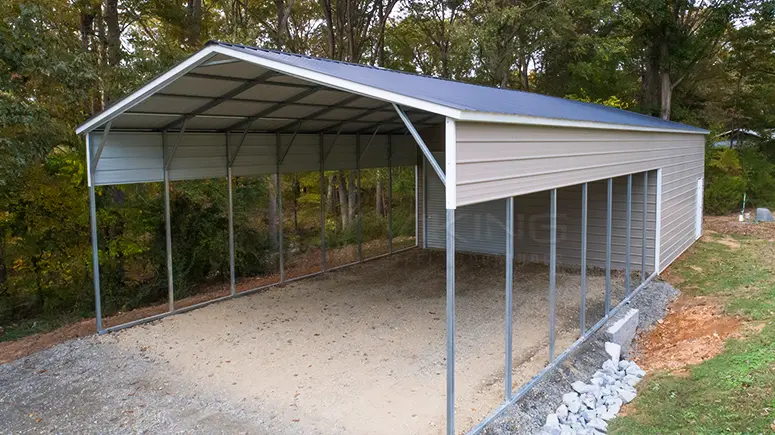
| 20x50x10 Utility Carport Starting Price: $10,235 GET FREE QUOTE |
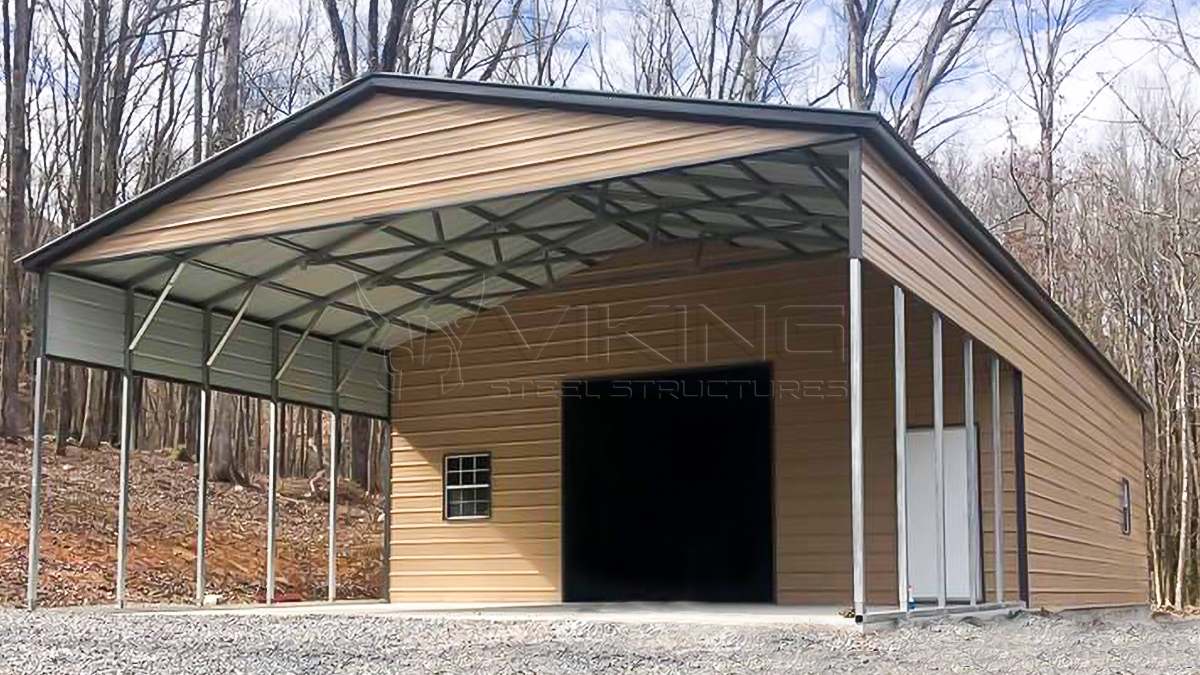
24x50x09 Vertical Roof Utility Building Starting Price: $10,595 GET FREE QUOTE |
 |
 |
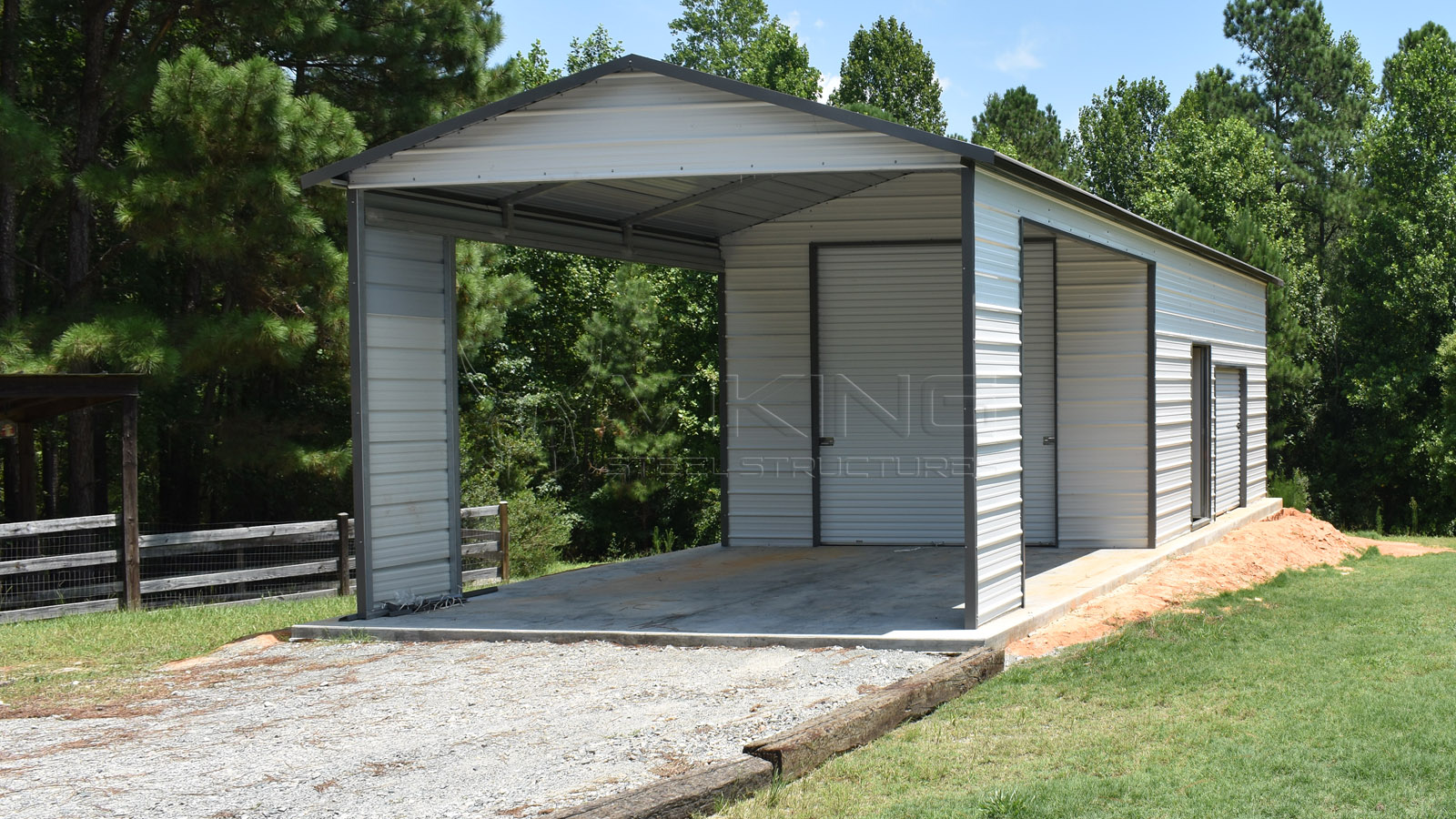
| 18x35x10 Metal Garage with Carport Starting Price: $9,445 GET FREE QUOTE |
30x65x12 Utility Carport Starting Price: $26,663 GET FREE QUOTE |
Looking for a metal building that fits your needs?
