Metal Garages Near Me – Complete Guide to Buying & Installing a Steel Garage
 Published On:
 Searching for a metal garage near me? You are in the right place. We have covered everything, from sizes and styles to costs, foundations, permits, and customization. Whether you are buying your first steel garage or upgrading to a larger one, this guide will help you make the best decision quickly.
What Are Metal Garages?
⚡ Quick Answer
Metal garages are prefabricated or custom-built structures made from steel or galvanized metal. They are stronger, longer-lasting, and lower-maintenance than wood garages. Available in a range of sizes and styles, they can be delivered and professionally installed directly on your property.
Unlike traditional wood-framed garages, prefab garages are engineered offsite and either delivered as a kit or installed fully by a crew.
There are two broad types to know about. Prefab metal garages come in standard sizes and are the fastest and most cost-effective option. Custom metal garages are built to your exact dimensions, roof style, color, and add-on preferences. Both options are widely available with professional installation included.
The demand for steel garage buildings has grown sharply over the last decade. Homeowners love the speed of installation. Businesses choose them for their durability. And rural property owners rely on them for everything from hay storage to full workshop setups.
Why Choose a Steel Garage Over a Wood Garage?
⚡ Quick Answer
Steel garages outlast wood garages by decades, resist fire, pests, and rot, and cost significantly less to maintain over time. For most buyers, a steel garage is the smarter long-term investment.
If you are comparing a metal garage to a traditional wood-framed structure, the numbers tell the story quickly. Wood garages typically last 20–30 years before major structural issues begin. A well-built steel garage can last 40–60 years or more with minimal upkeep.
40–60 Years
Average lifespan of a professionally installed steel garage building is nearly double that of wood
Source: American Institute of Steel Construction
Here is how they compare across every category that matters to a buyer:
| Category | Steel Garage | Wood Garage |
| Lifespan | 40–60+ years | 20–30 years |
| Fire Resistance | High. Steel is non-combustible | Low — wood burns easily |
| Pest Resistance | Full — termites cannot touch steel | Vulnerable to termites and rot |
| Maintenance Cost | Very low — occasional paint or sealant | High — regular rot, paint, repair |
| Installation Time | 1–3 days (professional install) | Several weeks |
| Customization | Highly customizable | Customizable but costly |
| Resale Value Impact | Strong — permanent structure | Moderate |
| Weather Resistance | Engineered for wind and snow loads | Requires additional reinforcement |
What Size Metal Garage Do I Need?
⚡ Quick Answer
The most popular sizes are 12×20 for one car, 20×20 for two cars, and 30×30 for three-car garages or a workshop. Your best size depends on what you plan to store, how much clearance you want, and whether you need space for a workbench or storage shelving.
Choosing the wrong size is one of the most common buyer mistakes. Most people underestimate how much space they actually need. A good rule: always go one size larger than you think you need today. You will fill the extra space faster than you expect.
- Single Car Metal Garages – 12×20 or 12×25: A 12×20 steel garage fits one standard vehicle comfortably with some room for basic storage alongside the car. A 12×25 adds five feet of depth, enough for a workbench at the back. These are the most budget-friendly prefab metal garage options and are popular for driveways and smaller lots.
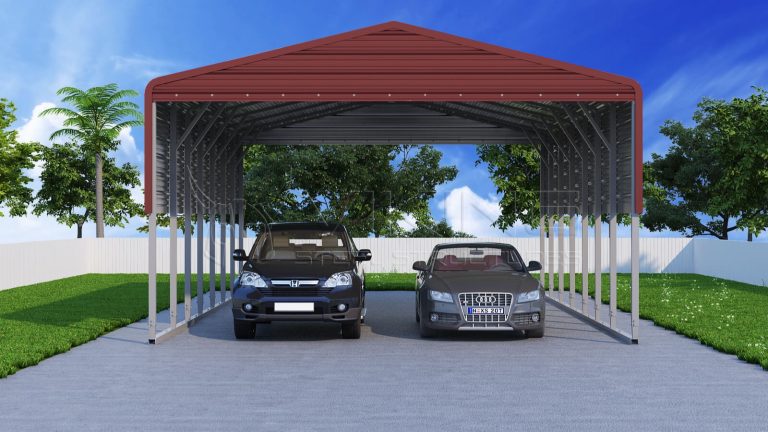
- Two Car Metal Garages – 20×20 or 24×24: A 20×20 fits two average-sized vehicles side by side with minimal walking clearance. Most buyers with two cars prefer a 24×24, which gives comfortable door-swinging room on both sides plus rear storage space. The 24×24 is consistently the best-selling size in the US.
- Three Car Metal Garages – 30×30 or 30×40: Three-car garages start at 30×30 and go up from there. A 30×40 is ideal if one of your three bays will double as a workshop or hobby space. These sizes often require a building permit and a reinforced concrete slab, but deliver exceptional utility for active families and hobbyists.
- Large Steel Garage Buildings – 40×60 and Beyond: A 40×60 metal building is no longer just a garage – it becomes a full-scale shop, barn, or commercial storage facility. These structures typically require engineer-stamped drawings and local permits. They are widely used on farms, by contractors, and by small businesses that need serious covered storage.
| Steel Garage Size Quick Reference | |||
| 1
12×20 / 12×25 Single Car |
2
20×20 / 24×24 Two Car |
3
30×30 / 30×40 Three Car |
+
40×60+ Commercial / Shop |
| Size | Best For | Avg Installed Cost (US) |
| 12×20 | Single vehicle, minimal storage | $4,500 – $7,500 |
| 12×25 | Single vehicle + rear workbench | $5,000 – $8,500 |
| 20×20 | Two vehicles, tight fit | $7,000 – $11,000 |
| 24×24 | Two vehicles, comfortable clearance | $8,500 – $13,500 |
| 30×30 | Three vehicles or large workshop | $12,000 – $18,000 |
| 30×40 | Three vehicles + hobby/work area | $14,000 – $22,000 |
| 40×60 | Commercial, farm, contractor shop | $22,000 – $40,000+ |
Installed cost estimates include standard delivery, assembly, and a basic concrete slab. Prices vary by region, gauge, and add-ons.
How Much Does an Installed Metal Garage Cost?
⚡ Quick Answer
A basic, installed single-car metal garage starts around $4,500. A two-car steel garage with standard features runs $8,500–$13,500. Larger custom builds can reach $40,000 or more. Installation, foundation, and permits are the three biggest cost variables beyond the building itself.
What Affects the Price?
Several factors move the final number significantly. Understanding them helps you budget accurately and avoid surprises.
- Steel gauge: 14-gauge steel is thicker and stronger than 20-gauge steel. Heavier gauge costs more but lasts longer and handles snow and wind better.
- Roof style: A regular roof is cost-effective. Vertical roof is the most durable, but it adds cost. Boxed-eave sits in between.
- Add-ons: Each window, walk-in door, roll-up door, or insulation package adds to the base price.
- Foundation type: Concrete slab is the most common, expect $4–$8 per square foot on top of the building cost.
- Delivery distance: Most dealers charge more for deliveries beyond 50–100 miles from their facility.
- Local permit fees: These vary widely by county, from $50 to $500 or more, depending on structure size.
Installation Cost vs DIY
Some prefab metal garages are sold as DIY kits. If you are handy, a small kit garage can save $800–$2,000 in labor. However, for anything larger than a single-car garage, professional installation is strongly recommended. Mistakes in anchoring or framing can void your warranty and create structural risks down the road. That’s why you must know anchors and screws for the strength and durability of your garage.
| What Drives the Cost of an Installed Steel Garage? | ||
| Building Size | Highest Impact | |
| Foundation / Concrete | High Impact | |
| Roof Style & Gauge | Medium-High | |
| Add-ons & Customization | Medium | |
| Permit & Zoning Fees | Lower Impact | |
| Delivery Distance | Variable | |
| Source: Industry averages compiled from US steel garage dealer data, 2024–2025 | ||
What Style Options Are Available for Steel Garages?
⚡ Quick Answer
There are three main roof styles for metal garages: regular, boxed-eave, and vertical. Each looks different, performs differently in different weather conditions, and sits at a different price point. Vertical roof garages are the strongest and most recommended for areas with heavy rain or snow.
The roof style you choose affects how your steel garage handles water runoff, snow accumulation, and wind resistance. It also changes the overall look of the building. Here is a clear breakdown:
- Regular Roof Style: The most economical option. Regular roof steel garages have rounded, curved edges at the corners. They are perfectly adequate in mild climates with low annual rainfall and minimal snow. Not recommended for areas that get regular heavy storms. Best choice for budget-conscious buyers in the South or Southwest.
- Boxed-Eave Roof Style: The mid-range option. Boxed-eave roofs have an A-frame shape with horizontal roof panels running side to side. They look more like a traditional house roof and sit well in most climates. A solid all-around choice for buyers who want better weather performance without paying for the premium vertical option.
- Vertical Roof Style: The best-performing option. Vertical roof steel garages have panels that run vertically from peak to eave. This means rain and snow slide straight off rather than sitting on the surface. Vertical roofs are significantly stronger in high-wind zones, heavy snow regions, and coastal areas. If you are building something permanent, a vertical roof is always worth the extra cost.
| Regular Garage | Boxed-Eave Roof | Vertical Roof |
| Cost
Most budget-friendly |
Cost
Mid-Range |
Cost
Premium |
| Best For
Mild climates, tight budgets |
Best For
Balanced look and performance |
Best For
Heavy rain, snow, high wind |
| Durability
Good |
Durability
Better |
Durability
Best |
Do Metal Garages Come Installed Near Me?
⚡ Quick Answer
Yes. Most reputable steel garage dealers offer delivery and professional installation across the continental US. Installation typically takes 1–3 days, depending on size. The crew handles framing, anchoring, and roofing, you just need to have the site prepared and level before they arrive.
Finding installed metal garages near you has never been easier. Most dealers operate regionally and have certified installation crews that travel to your site. When you place an order, here is what the process typically looks like:
- Step 1 — Request a quote online or by phone — provide your size, style, and location.
- Step 2 — Approve your design and pay a deposit — usually 10–25% of the total cost.
- Step 3 — Prepare your site — level the ground and arrange the foundation if required.
- Step 4 — Delivery and installation day — crew arrives with all materials and tools.
- Step 5 — Final walkthrough — inspect the structure before signing off.
Note: Most steel garage installations are completed in one day for smaller buildings and two to three days for larger structures over 30 feet wide.
Before booking, ask your installer these key questions:
- Is installation included in the quoted price or billed separately?
- Does the quote include anchoring and door hardware?
- Who is responsible for the building permit – you or the dealer?
- What happens if the weather delays the installation?
- What warranty is provided on labor and materials?
Do I Need a Permit for a Metal Garage?
⚡ Quick Answer
In most US counties, a building permit is required for any permanent structure, including metal garages. Requirements vary by location and building size. Structures under 200 sq ft are sometimes exempt, but anything larger almost always needs a permit. Always check with your local building department before installation.
Permit requirements are one of the most commonly overlooked parts of buying a steel garage. Skipping this step can result in fines, forced removal, or problems when selling your property.
Here is what typically triggers a permit requirement:
| Situation | Permit Typically Required? |
| Structure over 200 sq ft | Yes — in almost all US counties |
| Permanent foundation (concrete) | Yes — universally |
| Commercial or farm use | Yes — plus zoning review |
| High wind or snow load zone | Yes — with engineering specs |
| Structure under 200 sq ft on gravel | Sometimes exempt — check locally |
| Adding electricity or plumbing | Yes — separate electrical/plumbing permit |
Wind and snow load certifications are worth understanding, too. In states like Texas, Florida, Oklahoma, and most of the Mountain West, garages must be rated for specific wind speeds, often 90–140 mph. In northern states, snow load ratings of 20–40 lbs per square foot are commonly required. A reputable metal garage dealer will include these certifications automatically when building for your region.
Pro Tip: Many dealers handle the permit application on your behalf as part of the installation package. Always confirm this upfront; it saves significant time and stress.
What Foundation Does a Metal Garage Need?
⚡ Quick Answer
A concrete slab is the most recommended foundation for any metal garage. It provides the strongest anchor points, protects against moisture, and maximizes the lifespan of your building. Gravel is a workable budget alternative for smaller prefab garages, but concrete is always the long-term smart choice.
Concrete Slab – Most Recommended: A poured concrete slab with anchor bolts is the gold standard. It keeps the structure level, prevents moisture intrusion, and allows the frame to be bolted down securely. Standard thickness is 4 inches for residential use and 6 inches for vehicles over 6,000 lbs or commercial applications. Expect to pay $4–$8 per square foot for a quality residential slab.
Gravel Base – Budget Alternative: A compacted gravel pad works for smaller prefab metal garages in areas where local codes allow it. It costs less and drains well. The downside is less stability over time – buildings on gravel can shift slightly as the ground settles. Not recommended for anything over 20 feet wide or in areas with heavy freeze-thaw cycles.
Asphalt and Other Options: Asphalt is occasionally used but is generally not recommended. It softens in extreme heat and does not hold anchor bolts as reliably as concrete. Some buyers in mild climates use asphalt if they already have an existing pad. Always verify with your dealer before assuming an existing surface is acceptable.
| Foundation Type | Cost Per Sq Ft | Durability | Best For |
| Concrete Slab | $4 – $8 | Excellent — 50+ years | All permanent metal garages |
| Gravel Base | $1 – $3 | Good — 10–20 years | Small prefab garages, rural installs |
| Asphalt (existing) | $0 if existing | Fair — heat-sensitive | Mild climates only, temporary use |
Can I Customize My Steel Garage?
⚡ Quick Answer
Yes. Steel garages offer extensive customization. You can use a 3D building design tool to choose your roof style, door types and sizes, number of windows, insulation, color, and even add lean-to extensions. Most reputable dealers let you configure everything before you order, so the building arrives exactly as you designed it.
This is one of the biggest advantages of modern steel garage buildings over old-fashioned prefab sheds. Here is what you can typically customize:
| Popular Steel Garage Customization Options | |||
| #
Garage Doors Roll-up, sectional, or sliding |
W
Windows Single, double, or sliding panels |
D
Walk-in Doors Standard or with deadbolt |
I
Insulation Roof, wall, or full package |
- Color and finish: Most dealers offer 12–20 standard colors. Match your home exterior or go bold.
- Lean-to extensions: Add a covered lean-to on one or both sides for extra covered storage or a carport.
- Ventilation: Ridge vents and gable vents are essential for any enclosed and insulated building.
- Skylights: Polycarbonate roof panels let in natural light without sacrificing the steel roof structure.
- Wainscoting: A contrasting color panel along the lower wall adds a professional, finished look.
How Long Do Metal Garages Last?
⚡ Quick Answer
A properly installed steel garage building lasts 40-60 years on average. Some last longer. The key factors are the gauge of steel used, the quality of the galvanized coating, the climate you live in, and how well the building is maintained over time.
Metal garage lifespan is one of the top questions buyers ask, and for good reason. You are making a significant investment. Here is what affects how long yours will last:
- Steel gauge – 12-gauge and 14-gauge steel last significantly longer than thinner 20-gauge options. Always ask your dealer what gauge they use as their standard.
- Galvanized coating – Hot-dip galvanization creates the strongest rust barrier. Look for G-90 or better coating on any building you buy.
- Climate – High-humidity coastal areas and regions with frequent freeze-thaw cycles cause faster corrosion. In these areas, invest in heavier gauge steel and premium coating.
- Maintenance – Touch up any scratched or chipped paint promptly. Clean gutters and ensure water drains away from the base. Inspect anchor bolts annually.
Warranties vary significantly between manufacturers. Most reputable dealers offer a 20-year rust-through warranty and a 1-year labor warranty on installation. Always get the warranty in writing before you sign anything.
Pro Tip: A 12-gauge steel garage with a vertical roof and a G-90 galvanized coating in a dry climate can easily outlast a 40-year mortgage.
Frequently Asked Questions
Can I install a metal garage on dirt or gravel?
You can install small prefab metal garages on compacted gravel, but bare dirt is never recommended. Dirt provides no structural support and causes shifting, moisture damage, and rust at the base plates over time. Always use at a minimum a packed gravel pad, and get concrete for anything permanent.
Are metal garages worth the money?
Yes, for most buyers, absolutely. The upfront cost is higher than a basic wood shed, but the 40-plus year lifespan, near-zero maintenance cost, and fire and pest resistance make steel garages a superior long-term value. Most homeowners who go with steel wish they had done it sooner.
How long does it take to get a metal garage delivered?
Delivery lead times vary by dealer and region. Standard prefab sizes are usually delivered within 2–6 weeks of order. Custom metal garages with specific dimensions and add-ons can take 6–12 weeks. Always confirm your lead time before ordering if you have a deadline.
What is the strongest gauge steel for a garage?
12-gauge is the thickest and strongest commonly available for residential steel garages. 14-gauge is an excellent all-around choice. Avoid anything thinner than 14-gauge if you plan to keep the building for more than 10 years or live in an area with extreme weather.
Can I add electricity or plumbing to a metal garage?
Yes. Both are common additions. Electrical work requires a licensed electrician and a separate electrical permit. Plumbing is less common but fully achievable with proper planning. Let your dealer know before ordering so conduit paths and any necessary framing additions can be included in the build.
Are metal garages good in cold climates?
Yes – with the right specs. In cold climates, choose a vertical roof (for snow runoff), 14-gauge or heavier steel, and insulation for any heated space. Make sure your building is rated for the local snow load requirement. Properly spec’d steel garages handle harsh northern winters without any issues.
What is the cost-effective metal garage option?
A 12×20 single-car regular-roof prefab metal garage on a gravel base in a mild climate is the easiest entry point, typically $3,500–$5,500 installed. If the budget is tight, this is a solid starting point that you can always expand or upgrade later.
Ready to Find a Metal Garage Near You?
Buying a metal garage is one of the most practical investments you can make for your property. The decision comes down to a few key choices: the right size for what you need today and tomorrow, the right roof style for your climate, a solid foundation that protects your investment, and a reputable local dealer who handles permits and installation properly.
Steel garage buildings offer decades of dependable, low-maintenance performance that wood simply cannot match. Whether you need a simple single-car shelter, a spacious two-car garage with a workshop, or a large commercial-grade steel building, there is an installed option near you ready to be configured and delivered.
So, get your measurements, decide on your must-have features, and then search metal garages near me to reach out to a local metal garage dealer for a quote. Most offer free quotes with no obligation, and you will likely be surprised by how fast a quality steel garage can go up on your property.
Looking for a metal building that fits your needs?
