How Small Businesses Are Using Buildings as Strategic Assets (Not Just Storage)
 Published On:
 For decades, small businesses treated buildings as fixed overhead. They used them for rent to pay, utilities to manage, and maintenance to tolerate.
But that mindset is shifting.
Today, smart small businesses are treating their buildings, whether steel buildings, concrete, or wooden, as strategic tools that drive profitability, operational efficiency, and long-term wealth creation. Let’s break down how and why this shift matters more this year than ever before.
Are You Paying for Space or Using It to Grow?
Most small business owners ask: “How much does this space cost me?” Very few ask: “What is this space doing for my business?” That difference defines whether a building is an expense or an asset.
The Hidden Cost of “Just a Warehouse” Thinking
According to the U.S. Small Business Administration (SBA), occupancy costs (rent, utilities, maintenance) can account for 5% to 15% of gross revenue, depending on industry. For retailers, it can go even higher.
Now imagine this:
- You pay $12,000 per month in rent
- Over 10 years → that’s $1.44 million
- And you build zero equity
That’s not storage. That’s long-term cash leakage. Businesses that treat space strategically analyze:
- Revenue per square foot
- Storage efficiency
- Vertical capacity
- Expansion flexibility
Why More Small Businesses Are Choosing to Own Instead of Lease
According to the National Association of Realtors (NAR), nearly 49% of small businesses prefer owning commercial property when financially feasible because it stabilizes long-term occupancy costs.
Why? Because rent rarely goes down. But fixed mortgage payments remain predictable. During 2022–2024, commercial lease rates increased significantly in many U.S. markets due to supply shortages (CBRE market reports). That shock prompted many owners to rethink their long-term reliance on landlords.
This leads to the next question: If you own the building… does it actually create financial leverage?
When Does a Building Start Making You Money?
Just owning a building doesn’t automatically make you smart or strategic. Some businesses buy property emotionally. Others buy it intentionally with numbers, long-term planning, and financial modeling.
A building starts making you money when it improves your financial position over time, not just when it gives you a place to operate. So let’s walk through this calmly and practically.
Lease vs Own — What Does 10–15 Years Really Cost?
Imagine you’re leasing a facility for $10,000 per month. That sounds manageable, right? But commercial leases usually increase annually. Let’s assume just a modest 3% increase per year. Over 15 years, that lease doesn’t cost $1.8 million as it seems at first glance; it actually exceeds $2.1 million.
And after 15 years? You own nothing. No equity. No asset. No leverage.
Now compare that to owning.
Say you purchase a $1.5 million property. You put 20% down and take a fixed-rate mortgage. For 15 years, you make payments, similar to rent, but something different is happening in the background. You’re building equity.
Each payment increases ownership. Meanwhile, commercial real estate in the U.S., according to long-term Federal Reserve data, has historically appreciated over time. So instead of paying for space. You’re converting occupancy cost into asset accumulation.
That’s the difference.
How Real Estate Builds Equity for Small Businesses
When you own your facility, especially scalable steel buildings that are cost-efficient and expandable, you quietly strengthen your business in ways many people don’t notice at first.
Here’s what really changes:
First, your balance sheet improves. You now have a tangible asset under your company’s name. Second, your company valuation increases. If someone wants to buy your business one day, owning real estate makes your company look more stable and less risky. Third, you unlock financial flexibility.
Banks look at asset-backed businesses differently. If your company controls physical infrastructure, lenders see collateral. That reduces their risk and increases your borrowing power. Now your building isn’t just a shelter; it becomes financial strength. But choose a structure after considering the top 2026 metal building trends, if you want a modern structure for current needs.
Can You Borrow Against Your Building to Fund Expansion?
This is where it gets interesting. Many small manufacturers and contractors refinance their commercial property once equity builds up. They use commercial equity loans or refinancing to pull capital out of the building, without selling the building.
And what do they use that money for?
- Upgrading equipment
- Expanding inventory
- Hiring more workers
- Opening new service lines
Instead of looking for investors or taking high-interest unsecured loans, they use their own property as leverage. That’s powerful. Because now the building isn’t just protecting inventory.
It’s funding growth. It’s acting like a financial engine inside the business.
Is Your Building Reducing Operational Cost or Increasing It?
A poorly designed building silently increases labor costs; a strategic one reduces them. Let’s understand this in more detail below.
How Layout Design Impacts Productivity
Lean manufacturing principles show that optimized workflow reduces unnecessary movement and wasted labor time. According to research from the Lean Enterprise Institute, inefficient layout design can increase operational costs by 15–30% due to material-handling inefficiencies.
Since clear-span Steel buildings eliminate interior support columns. That flexibility allows:
- Better equipment placement
- Efficient forklift pathways
- Wider loading access
Small changes in layout can reduce labor hours every single day.
Why Ceiling Height Can Increase Revenue Per Square Foot
Vertical storage changes everything. If you operate at 14 ft height instead of 20 ft height, you lose stacking capacity. Warehousing studies show that high-bay storage significantly improves cubic space utilization compared to floor-only storage models.
A 20 ft tall metal building with mezzanine installation can nearly double usable operational space without increasing land footprint. That’s strategic design.
How Smart Design Cuts Labor and Storage Costs
Smart businesses design for:
- Dock alignment
- Wide turning radius
- Dedicated inventory zones
- Climate-controlled areas when needed
That’s why pre-engineered steel buildings are growing in popularity. They allow layout customization at a lower construction cost compared to traditional concrete builds.
Now let’s zoom out.
If design improves operations… can the building itself create revenue?
Can Your Building Generate Extra Revenue?
This is where most businesses think too small. But a building can generate money beyond your core service. Here is how.
Subleasing Unused Space
If you own 10,000 sq ft but use only 7,000, that 3,000 sq ft can become co-warehousing space, equipment rental zone, small subtenant offices, and more. According to IBISWorld, flexible workspace demand has grown consistently as small operators seek affordable industrial access.
Turning Storage Into a Rental Model
Contractors who use prefabricated buildings, such as steel garages, often rent them for equipment storage, trailer parking, fleet space, and more. Unused space can become recurring income.
Solar Panels and Energy Credits as Income
According to the U.S. Department of Energy, commercial solar adoption continues to grow due to federal tax incentives and declining installation costs. Large roof surfaces on metal buildings create opportunities for:
- Reduced electricity bills
- Energy tax credits
- long-term ROI improvement
For details about how to get a tax exemption and save more, read the section 179 for metal structures.
But money isn’t everything; reputation matters too. So, owning a building can improve your brand?
Does Owning a Facility Improve Your Brand and Credibility?
Let us ask you something. If you are choosing between two companies, one working from a shared rented unit and another operating from its own large facility, which one feels more stable?
Most people trust businesses that look permanent.
When customers see your own building, clear signage, organized loading area, maybe even branded trucks parked outside, it sends a simple message: “We’re not going anywhere.”
And that matters.
How Physical Infrastructure Builds Trust
People may not say it openly, but physical presence builds confidence. When clients visit your space, they see your equipment, your team, and your setup. It feels real. It feels established. Even vendors behave differently. If you own your property, negotiations often become smoother because suppliers know you’re stable. You’re not shifting locations every few years. Ownership quietly strengthens your image, without you saying a word.
Why Investors Value Property-Backed Businesses Higher
Now think about investors or buyers. If someone wants to invest in your business, what feels safer? A company paying rent every month… Or a company that owns a valuable building?
When your business owns commercial real estate, whether that’s scalable steel structures, you are not just running operations. You are holding an asset. And assets reduce risk. Moreover, during economic slowdowns, businesses with property tend to look stronger because they have something solid backing them.
So ownership doesn’t just build credibility with customers, it builds confidence with investors too. But credibility is only one part of the story. Let’s talk about risk.
What Risks Do You Eliminate When You Control Your Space?
Leasing always comes with uncertainty. So, ask yourself:
- What if rent increases next year?
- What if the landlord doesn’t renew your lease?
- What if new rules limit how you use the space?
Those risks are real. Owning removes landlord dependency. You control the timeline. You control usage. You control decisions.
During supply chain disruptions in recent years, businesses that owned their own Steel buildings had more control over inventory and storage. They weren’t scrambling to relocate or renegotiate terms. Now here’s the bigger question…
Are you building only for today’s needs, or planning for the next 10 years?
Are You Designing for Today — or for the Next 10 Years?
Many small businesses construct a building based on current space needs. But growth rarely stays small. If you think short-term, your building becomes a limitation. If you think long-term, your building becomes a growth platform.
Planning for Expansion Without Relocating
Modern metal building systems are designed to expand.
You can:
- Extend walls
- Add more bays
- Install mezzanines for extra storage
That means when your business grows, you don’t have to move. You simply expand. Relocation costs money, but expansion costs less. That flexibility is strategic.
Modular Growth With Steel Buildings
Pre-engineered steel buildings are built with future growth in mind. You don’t need to tear down walls. You don’t need a heavy redesign. You simply need to add on.
This reduces:
- Construction downtime
- Structural changes
- Business interruption
The 5-Question Test – Is Your Building an Asset or a Liability?
Let’s make this simple. Ask yourself these five questions:
- Does my building help me make extra money?
- Does it lower my operating cost?
- Is it gaining value over time?
- Does it make my team more efficient?
- Will it increase my company’s selling price one day?
If you can say “yes” to at least three of these, your building is working for you. If not, it’s just space you are paying for.
Final Insight:
The smartest businesses don’t just ask: “How much does this building cost me?” They ask:
“What can this building do for me?”
So, when you use the metal building or any other building wisely, your space can become:
- A financial backup
- A way to lower costs
- A stronger brand signal
- A safety net during tough times
- A long-term wealth builder
At that point, it’s no longer storage, it’s strategy.
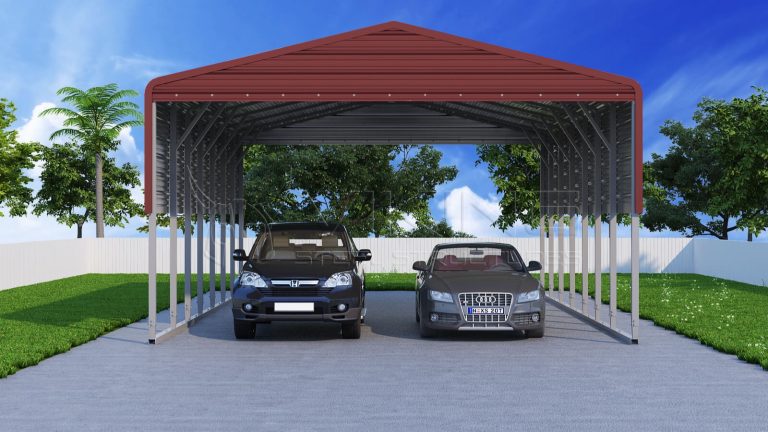
Looking for a metal building that fits your needs?
