All-Weather Metal Garages: What Makes a Garage Ready for Every Season?
 Published On:
 A garage can look perfectly strong on a sunny afternoon. The real test comes when the weather changes. Heavy rain can expose drainage problems. Snow can put extra weight on the roof. Strong winds can test the building’s structural strength, while summer heat can turn an enclosed garage into an uncomfortable space.
This is where all-weather metal garages stand out. But the phrase “all-weather” should mean more than simply having steel walls and a roof. A garage designed for year-round use needs the right combination of structural strength, roof design, weather sealing, ventilation, insulation, drainage, and site preparation. So, what actually makes a metal garage ready for every season?
What Does “All-Weather” Really Mean?
An all-weather garage is designed to provide reliable protection against the environmental conditions common in its location. That could mean heavy rainfall in one region, high winds in another, or snow and freezing temperatures somewhere else.
The important point is that no single garage design is automatically perfect for every climate. A garage in a hot, dry region may need more attention to heat control and ventilation. A building in a snowy area may need a roof and framing designed for local snow loads. Coastal or storm-prone areas may require additional consideration for wind and moisture.
Therefore, an all-weather metal garage should be planned around the conditions it will actually face.
1. A Strong Steel Frame Is the Starting Point
The structure itself needs to handle more than the weight of the roof. Wind, snow, rain, and other environmental forces can place stress on a garage throughout the year. A properly designed steel frame provides the structural foundation needed to handle those loads.
The gauge of the steel, framing configuration, bracing, connections, and overall engineering can all affect performance. This is also why it is important to consider local building codes and required load ratings before choosing a structure. A garage designed for mild weather may not be appropriate for a location that regularly experiences severe storms.
Steel also has some practical advantages for year-round use. It does not rot like wood, and properly coated or galvanized steel can provide strong resistance to corrosion.
2. The Roof Has a Huge Role to Play
If you had to choose one part of a garage to pay close attention to for weather protection, the roof would be high on the list. The roof has to deal directly with rain, snow, sunlight, wind, and falling debris.
Why Roof Style Matters:
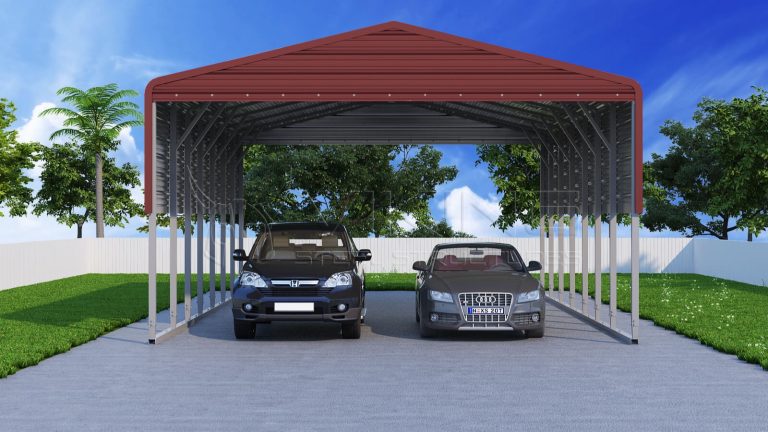
Different roof designs handle weather differently. A vertical roof garage has panels running from the ridge toward the eaves. This creates a surface that allows rain and snow to move downward rather than collecting along horizontal seams. That can be particularly useful in regions that experience heavy precipitation.
Roof pitch matters too. A steeper roof can help snow and rain move away from the building, although the best design depends on local conditions and engineering requirements. The takeaway is simple: choose the roof based on your climate, not just its appearance.
3. Weather Sealing Keeps the Outside Outside
A strong frame and durable roof won’t do much good if water and wind can easily enter through gaps. An enclosed garage needs attention around:
- Garage doors
- Walk-in doors
- Windows
- Roof edges
- Wall connections
- Other openings and joints
Proper sealing can help reduce water intrusion and unwanted airflow. This becomes especially important during heavy rain and high winds. Even a small gap that seems harmless during calm weather can become a noticeable entry point during a storm. When planning an all-weather garage, look at the entire building envelope rather than focusing only on the metal panels.
4. Insulation Helps With Extreme Temperatures
Steel is strong, but it also conducts heat efficiently. That means an uninsulated metal garage can become very hot during summer and very cold during winter.
If you only use the garage for occasional vehicle storage, this may not be a major concern. But if you plan to spend several hours inside working on vehicles, using tools, or maintaining equipment, temperature control becomes much more important.
Insulation can help slow heat transfer between the inside and outside of the building. It can also help reduce condensation, which is particularly useful when warm, humid air comes into contact with cooler metal surfaces. The right insulation depends on the local climate and how you plan to use the garage. A garage in a hot, humid region may have different requirements from one in a cold northern climate.
5. Ventilation Matters in Hot and Humid Weather
Imagine opening your garage door on a hot summer afternoon and being hit by a wall of warm air. That is not unusual in an enclosed metal building. Good ventilation helps move hot and humid air out of the structure. It can also help manage moisture and reduce condensation.
Depending on the building, ventilation can include strategically positioned vents, windows, ridge ventilation, or mechanical systems.
The important thing is to think about airflow during the design stage.
A garage that is completely sealed without considering ventilation may protect against rain while creating an uncomfortable environment inside.
6. Drainage Is Just as Important as the Building
When people think about weather protection, they usually look up. But some of the biggest problems start at ground level. Rainwater needs somewhere to go after it reaches the roof and surrounding property. If the site directs water toward the garage, standing water can collect near the foundation or entrance.
Before installation, consider:
- The natural slope of the property
- Driveway grading
- Roof runoff
- Existing drainage paths
- Low areas around the building
- Water flow during heavy storms
The garage should work with the property’s drainage instead of becoming a barrier that redirects water toward itself.
Good site preparation may not be the most exciting part of building a garage, but it can make a major difference during the first serious storm.
7. Think About the Weather Specific to Your Region
“All-weather” does not mean every garage should have exactly the same specifications. Your local climate should influence the building you choose.
Hot and Dry Regions
The main concerns may include intense sunlight, high temperatures, and heat buildup. Insulation, ventilation, roof design, and building orientation can all be important considerations.
Rainy and Humid Regions
Moisture management becomes a priority. Roof drainage, weather sealing, ventilation, and condensation control can help protect vehicles, tools, and stored equipment.
Snowy Regions
Snow adds weight to the roof, particularly when accumulation is heavy. The building should be designed according to the applicable local snow-load requirements. Roof configuration, framing, bracing, and pitch all deserve careful attention.
High-Wind Regions
Wind can place significant pressure on the roof and walls. Anchoring, structural connections, bracing, and the building’s overall design should meet the requirements for the local wind conditions.
Areas With Frequent Temperature Changes
Rapid changes between warm and cold conditions can increase the possibility of condensation. Insulation and proper ventilation can help create a more stable interior environment.
8. The Foundation Should Be Part of the Weather Plan
A garage does not start with the roof. It starts with the ground beneath it. A properly prepared foundation provides a stable base for the structure and helps maintain the building’s long-term performance. The type of foundation needed can depend on local soil conditions, building size, local codes, and the structure’s intended use.
Drainage should also be considered around the foundation. Water that repeatedly collects around the base of the garage can create problems over time. This is why site preparation should happen before the building arrives, not after.
9. Choose Features Based on How You Will Use the Garage
Weather protection is important, but the garage still needs to work for you. For example, a vehicle garage may need large roll-up doors and enough clearance for trucks or recreational vehicles. A workshop may need additional windows, electrical outlets, lighting, ventilation, and insulation.
A storage building may need fewer openings but more wall space and shelving. You can also consider features such as:
- Walk-in doors
- Windows
- Additional garage doors
- Insulation
- Ventilation
- Interior partitions
- Lean-tos
- Custom dimensions
The best all-weather garage is not simply the strongest building available. It is a structure that combines weather protection with the features you actually need.
How to Prepare Your Garage for Every Season
Before each major season, a quick inspection can help catch small issues early.
Before winter
Check the roof, drainage, doors, seals, and areas where snow or ice could accumulate.
Before summer
Inspect ventilation, insulation, roof surfaces, and openings that may allow excessive heat into the garage.
Before the rainy season
Clear drainage paths and check the roof and door seals for potential water-entry points.
After severe storms
Look for damaged panels, loose trim, leaks, unusual movement, or other visible changes. Regular inspections do not replace professional maintenance when needed, but they can help you notice problems before they become larger ones.
What Should You Look for When Choosing an All-Weather Metal Garage?
Before making a decision, ask a few practical questions:
- What weather does my area experience most often?- This helps determine whether wind, snow, heat, rain, or humidity should receive the most attention.
- Is the roof suitable for my climate?- Don’t choose a roof style based only on appearance.
- Will I need insulation?- If the garage will be used as a workshop or frequently occupied space, temperature control may be more important.
- How will water drain from the property?- Check the site before installation.
- Are the doors and openings properly sized and sealed?- They should accommodate your vehicles while helping keep weather out.
- Does the building meet local requirements? – Wind, snow, foundation, permitting, and other requirements vary by location.
The Goal Is Year-Round Protection
A truly all-weather metal garage is more than a steel box with four walls and a roof. It is a structure planned around the climate, site, intended use, and local requirements. The frame needs to be strong enough for expected loads. The roof should suit the weather. Openings should be properly sealed. Insulation and ventilation should be considered where needed, and drainage should be planned from the beginning.
You may not think about these details when the sun is shining. But when the first major storm arrives, they are exactly the details that matter. That is what makes a garage ready for every season: planning for the weather before the weather has a chance to test it.
Looking for a metal building that fits your needs?
