How Much Storage Space Do You Actually Need? A Practical Breakdown
 Published On:
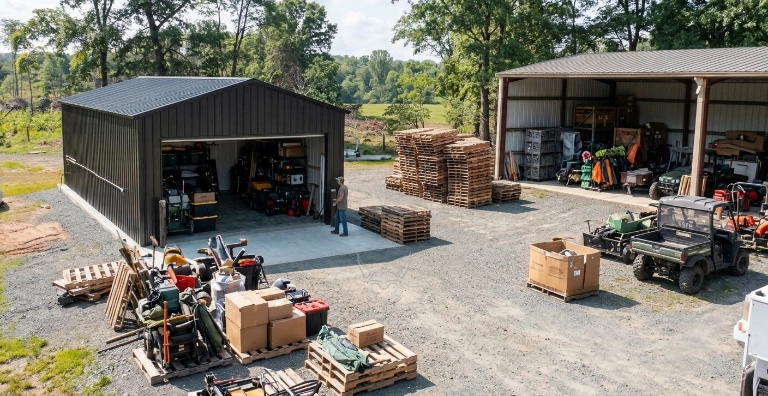
Choosing the right storage building size is not just about measuring the available space on your property. It is about understanding what you plan to store, how frequently you need access to it, and how much room you need to move things around.
A 10×20 building might work for household belongings, while farm equipment, multiple vehicles, or business inventory may require a much larger structure. The right size depends on your storage requirements today and the additional space you may need in the future.
Let’s break down common storage needs, recommended building dimensions, and practical examples to help you know the price of storage buildings.
Start With What You Actually Need to Store
To know how much does it costs to build a storage building, analyze your needs. Before comparing dimensions or estimating the storage building cost, make a list of everything you want to keep inside the structure.
Divide your belongings into categories:
- Household items: Furniture, mattresses, appliances, moving boxes, and seasonal decorations.
- Outdoor equipment: Lawn mowers, gardening tools, bicycles, and snowblowers.
- Vehicles: Cars, motorcycles, ATVs, boats, and recreational vehicles.
- Business inventory: Products, packaging materials, shelves, and equipment.
- Agricultural equipment: Tractors, feed supplies, machinery, and maintenance tools.
Next, measure your largest items. Pay particular attention to their height, width, and length. For example, storing a riding mower requires more than its physical footprint. You also need enough room to turn it, open its access points, and move it through the entrance.
A useful starting point is to reserve additional space for walkways and future storage rather than filling every square foot with belongings. Lowe’s storage shed guide also recommends allowing approximately 25% extra space for accessibility and future needs.
Storage Building Sizes: What Can You Fit Inside?
Different storage requirements call for different building dimensions. Here is a practical breakdown of common sizes and their potential uses.
| Building dimensions | Total area | Suitable storage needs |
| 10×12 | 120 sq. ft. | Garden tools, bicycles, and small equipment |
| 12×20 | 240 sq. ft. | Riding mower, ATV, and workbench |
| 20×20 | 400 sq. ft. | Household storage and outdoor equipment |
| 20×30 | 600 sq. ft. | Vehicles, tools, and business inventory |
| 30×40 | 1,200 sq. ft. | Multiple vehicles and larger equipment |
| 40×60 | 2,400 sq. ft | Agricultural machinery and commercial storage |
These are planning examples, not guaranteed capacity limits. Actual usable space depends on the building layout, door placement, wall height, shelving, and the dimensions of stored items. Let’s look at how different structures can meet specific storage requirements.
Choose the Right Storage Building for Different Needs
A. Small Storage Needs: 10×12 to 12×20 Buildings
If you primarily need extra space for household belongings or gardening equipment, the cost to build a storage building and its structure would be different.
A 10×12 storage building can accommodate:
- Lawn care tools and gardening supplies.
- Bicycles and outdoor furniture.
- Storage bins and seasonal decorations.
- Small equipment and hand tools.
A 12×20 structure provides more flexibility. It can accommodate a riding mower, workbench, gardening equipment, and additional supplies. Explore this compact enclosed metal storage shed or utility building. For homeowners who want organized outdoor storage without occupying a large portion of their property, these dimensions provide a practical starting point.
B. Household and Vehicle Storage: 20×20 to 20×30 Buildings
When storage requirements extend beyond garden equipment, consider a larger steel structure. A 20×20 building provides 400 square feet of floor space. Depending on its layout, it can accommodate a vehicle, tools, bicycles, and some household belongings.
A 20×30 building offers 600 square feet, providing more flexibility for combining vehicle storage with equipment or shelving.
For example, a homeowner might use one section for a vehicle and the remaining space for:
- Lawn equipment.
- Tool cabinets and workbenches.
- Seasonal household items.
- Spare tires and maintenance supplies.
A practical example is the 20x30x10 utility building, which combines an enclosed storage area with a utility section. Its configuration includes a garage door and a walk-in door. Another option is the 20x26x9 custom storage building, which includes an attached open lean-to. This arrangement separates enclosed storage from covered outdoor space.
C. Multiple Vehicles and Equipment: 30×40 Buildings
A 30×40 building provides 1,200 square feet, making it suitable for homeowners, contractors, and small business owners with several storage requirements.
You could use this space for:
- Two vehicles with additional equipment storage.
- A vehicle and a dedicated workshop area.
- Lawn tractors, ATVs, and maintenance tools.
- Business supplies and inventory shelving.
However, the arrangement matters. Two vehicles parked side by side need enough width for door access, while additional shelving can reduce the available parking area.
D. Agricultural and Commercial Storage: 40×60 and Larger
Agricultural and commercial storage often requires more than basic floor space. Tractors, trailers, construction machinery, bulk materials, and business inventory need adequate clearance and convenient access.
A 40×60 building provides 2,400 square feet, making it suitable for several equipment-storage arrangements.
Larger operations may need:
- Separate equipment and inventory zones.
- Wide access doors for machinery.
- Higher sidewalls for tall equipment.
- Clear-span interiors for flexible movement.
- Additional covered space for materials and vehicles.
If you are searching for steel storage building prices near me for businesses, a 20×50 combo utility building demonstrates how enclosed and open areas can work together. It includes a 20×15 open carport and a 20×35 enclosed garage.
For larger commercial operations, multi-bay storage buildings can provide separate parking or storage sections under one roof.
Floor Space Isn’t Everything: Consider Height and Accessibility
One common mistake buyers make is calculating storage requirements using only width and length. Building height is equally important, particularly when storing tall vehicles, machinery, or stacked materials.
Consider these examples:
- 10-foot sidewalls: May work for standard household storage, smaller vehicles, and general equipment.
- 12-foot sidewalls: Provide additional clearance for taller vehicles, equipment, and shelving.
- 14-foot or higher sidewalls: May be suitable for larger machinery, commercial equipment, and specific agricultural applications.
Also consider the following:
Door dimensions: A building may have sufficient interior space, but a narrow entrance can prevent larger equipment from entering.
Turning clearance: Vehicles and machinery need room to maneuver, especially when entering or exiting.
Vertical storage: Shelving and overhead storage can increase usable capacity without expanding the building footprint.
Walkways: Leave enough room to reach stored belongings without moving everything around.
How Much Storage Space Do You Need for Future Requirements?
Your current storage requirements may change over time. You might purchase another vehicle, expand your business inventory, or acquire additional agricultural equipment. Planning only for your existing belongings can result in limited usable space later.
Before finalizing your dimensions, consider:
- Will you purchase additional equipment within the next few years?
- Do you need a separate area for repairs or maintenance?
- Will you install shelving or storage racks?
- Do you expect to store larger vehicles in the future?
- Will multiple people need access to the building?
A useful approach is to leave approximately 20-25% additional usable space when your property and project requirements allow it. However, avoid selecting a significantly larger structure without a clear purpose. Larger buildings may require more site preparation, foundation work, materials, and maintenance.
Choose Space That Works, Not Just Fits
The right storage building should accommodate your belongings comfortably while leaving enough room for movement, access, and future requirements. Start with an inventory, measure your largest items, and match the dimensions to your actual storage needs.
Whether you need a compact utility shed, a multi-vehicle garage, or a larger agricultural storage structure, thoughtful planning can help you avoid paying for unused space or struggling with a building that is too small.
Frequently Asked Questions
1. How do I calculate the square footage of a storage building?
Multiply the building’s width by its length. For example, a 20×30 structure provides 600 square feet. Remember that this represents the total floor area, not necessarily the usable storage area after accounting for access paths and other fixtures.
2. Is a metal storage building suitable for storing furniture?
Yes. An enclosed metal storage building can be used for furniture, appliances, and household belongings. Consider insulation, ventilation, moisture control, and suitable interior storage arrangements to protect sensitive items.
3. What size storage building do I need for a tractor?
The answer depends on the tractor’s dimensions, attachments, and turning requirements. Measure the tractor with its widest attachments and allow additional clearance for entry, parking, and maintenance. A larger utility building or equipment garage may be more suitable for bigger agricultural machinery.
4. Can I use one storage building for both personal and business purposes?
Yes. You can divide an enclosed building into separate storage zones using shelving, partitions, or designated floor areas. Make sure the layout allows convenient access to both household belongings and business equipment.
5. Should I choose an enclosed storage building or an open-sided structure?
An enclosed building is generally more suitable for belongings that need protection from weather, dust, and unauthorized access. Open-sided structures work well for equipment and vehicles that need covered parking with easy access. Your intended use should determine the configuration.
Looking for a metal building that fits your needs?


