Shed Sizes Guide: Standard Dimensions, Square Footage & How to Pick the Right One
 Published On:
 Picking a shed size is a lot like picking a suitcase. Go too small and you’re sitting on the lid trying to zip it shut; go too big and you’re hauling around empty space you paid for. Get it right, and you stop thinking about it entirely – everything just fits.
This guide covers every standard shed size sold in the U.S. today, from a compact 6′ x 8′ tool shed all the way up to 40′ x 60’+ garage-sized buildings, along with the square footage, typical uses, foundation requirements, and rough costs for each. We’ll also cover something most shed-sizing guides skip entirely: how metal shed sizing actually works differently from wood, and how much real storage space common items like mowers, ATVs, and motorcycles need – so you’re not just guessing at a category, you’re sizing your shed to what you’ll actually put in it.
Shed Size Chart at a Glance
| Category | Typical Footprint | Square Footage | Wall Height | Best For |
|---|---|---|---|---|
| Compact | 6′ x 8′ to 8′ x 10′ | 48–80 sq. ft. | 6’–8′ | Garden tools, bikes, small mower |
| Small | 8′ x 12′ to 10′ x 10′ | 96–100 sq. ft. | 7’–8′ | Yard equipment, firewood, small workshop |
| Medium | 10′ x 12′ to 12′ x 16′ | 120–192 sq. ft. | 8’–9′ | Riding mower, ATV, hobby space, home office |
| Large | 12′ x 20′ to 16′ x 24′ | 240–384 sq. ft. | 9’–10′ | Workshop, small vehicle, home gym, she-shed |
| Extra-Large | 20′ x 30′ to 30′ x 40′ | 600–1,200 sq. ft. | 10’–14′ | Multi-vehicle storage, farm equipment, business space |
| Commercial / Garage-Class | 32′ x 40′ and up | 1,280+ sq. ft. | 12’–16’+ | Warehousing, fleet storage, large workshops |
Wall heights and exact square footage vary by manufacturer and roof style, but this table gives you a solid starting point before we break each category down.
Standard Shed Sizes by Category
Compact and Small Sheds (Under 100 Sq. Ft.)
This is the entry point for most backyard storage. A 6′ x 8′ or 8′ x 8′ shed is enough for hand tools, a push mower, bikes, and seasonal decorations. Step up to 8′ x 10′ or 8′ x 12′ and you gain enough depth to add a small workbench or shelving without feeling cramped.
Common dimensions: 6×8 (48 sq. ft.), 8×8 (64 sq. ft.), 8×10 (80 sq. ft.), 8×12 (96 sq. ft.), 10×10 (100 sq. ft.)
Good for: garden tool storage, dog houses, firewood, chicken coops, seasonal decor, single push mower
This size range is also the sweet spot for staying under many local no-permit thresholds, though that number varies by city and county – we cover this in detail in our guide to shed, carport, and garage permit rules. If a compact footprint is all you need, our tool shed and garden shed lines are purpose-built for this range.
Medium Sheds (100–200 Sq. Ft.)
This is where sheds stop being just “storage” and start becoming usable space. A 10′ x 12′ shed (120 sq. ft.) is the most-searched shed size in the country for a reason – it’s large enough for a riding mower, an ATV, or a legitimate workbench, but still small enough to fit on most residential lots without dominating the yard. Move up to 12′ x 16′ (192 sq. ft.) and you have genuine flexibility: a full workshop, a home office, or a she-shed with room to actually move around.
Common dimensions: 10×12 (120 sq. ft.), 10×14 (140 sq. ft.), 10×16 (160 sq. ft.), 12×12 (144 sq. ft.), 12×16 (192 sq. ft.)
Good for: riding mowers, ATVs, motorcycles, home offices, hobby workshops, pool houses, she-sheds/man caves
This range overlaps directly with our most popular metal sheds and outdoor metal sheds, and it’s also where you’ll start seeing local permit thresholds kick in – many jurisdictions set the exemption line right around 120 square feet, so this is a good moment to check with your local building department before finalizing a size.
Large Sheds (200–400 Sq. Ft.)
Once you cross 200 square feet, a shed starts functioning more like a small building than a backyard box. A 12′ x 20′ (240 sq. ft.) or 16′ x 24′ (384 sq. ft.) structure can comfortably fit a small car or truck, double as a full workshop with room to walk around large equipment, or serve as a legitimate secondary living or business space.
Common dimensions: 12×20 (240 sq. ft.), 14×20 (280 sq. ft.), 16×20 (320 sq. ft.), 16×24 (384 sq. ft.)
Good for: small vehicle or boat storage, home gyms, full workshops, small business space, multi-purpose barns
Take a look at our car shed and lean-to storage shed options if you’re sizing up into this range – a lean-to design is also a smart way to add large-shed square footage onto an existing carport or garage without building a whole new freestanding structure.
Extra-Large and Garage-Class Sheds (400+ Sq. Ft.)
This is the category most shed-sizing guides skip entirely, largely because most wood and vinyl shed manufacturers simply can’t build reliably at this scale. Steel changes that. Because engineered metal framing spans much wider clear widths than wood stick-framing without interior support posts, metal buildings can scale from a 20′ x 30′ equipment shed all the way to a 40′ x 60′ or larger structure using the same basic construction method – just bigger.
Common dimensions: 20×30 (600 sq. ft.), 24×36 (864 sq. ft.), 30×40 (1,200 sq. ft.), 40×60 (2,400 sq. ft.) and larger custom sizes
Good for: multi-vehicle or fleet storage, tractors and farm equipment, RVs and boats, workshops with full-size equipment, small commercial or warehouse space
Our extra-large metal sheds line and mini storage buildings are built specifically for this range, and if you need something bigger still, our commercial metal buildings go well beyond 40′ wide.
Why Metal Shed Sizing Isn’t the Same as Wood or Vinyl
Most shed-sizing guides treat “shed” as one material-neutral category. In practice, the material sets a hard ceiling on how big a shed can get before it needs a completely different construction approach.
- Wood and vinyl sheds are typically stick-built or panelized, which means larger sizes require more interior framing, more support posts, and – past a certain footprint – a jump to pole-barn or timber-frame construction methods with a much higher price per square foot.
- Metal sheds use engineered steel trusses and framing that can clear-span much wider openings without interior posts breaking up the floor space. That’s why you’ll see wood sheds top out around 12’–16′ wide in most standard catalogs, while metal buildings scale smoothly from a 10′ x 12′ backyard shed up to a 40’+ wide equipment building using the same basic construction system.
- Steel also holds its shape better at large sizes. Wood framing can sag, warp, or shift over time, which matters more the larger the structure gets. A galvanized steel frame is engineered to local wind and snow load codes regardless of size, which is part of why larger operations – farms, contractors, small businesses – default to metal once they’re past the “backyard shed” range.
The practical upshot: if you think you might need to size up significantly down the road, starting with a metal building keeps that door open in a way that wood typically doesn’t.
The Most Popular Shed Sizes
Based on typical order patterns across the metal building industry, a handful of sizes account for the majority of residential shed sales:
| Rank | Size | Square Footage | Why It’s Popular |
|---|---|---|---|
| 1 | 10′ x 12′ | 120 sq. ft. | Best balance of storage capacity, cost, and permit-friendly footprint |
| 2 | 12′ x 16′ | 192 sq. ft. | Enough room for a workshop or she-shed without feeling like a big project |
| 3 | 12′ x 20′ | 240 sq. ft. | Fits a small vehicle or serves as a legitimate multi-use building |
| 4 | 8′ x 10′ | 80 sq. ft. | Budget-friendly entry point for basic yard storage |
| 5 | 20′ x 20′ | 400 sq. ft. | Popular “step-up” size for equipment, hobby shops, and small garages |
If you’re torn between two sizes, the general rule of thumb from experienced shed buyers holds up well: most people who buy a smaller shed end up wishing they’d sized up, while very few people who buy a slightly larger shed regret the extra room. Given how modest the price difference often is between adjacent sizes, it’s usually worth going one size larger than your current need if your budget and yard space allow it.
Shed Sizes by Use Case
| Use Case | Recommended Sizes | Square Footage |
|---|---|---|
| Basic tool/garden storage | 6×8, 8×8, 8×10 | 48–80 sq. ft. |
| Riding mower or ATV storage | 10×12, 10×14 | 120–140 sq. ft. |
| Motorcycle storage | 10×12, 12×16 | 120–192 sq. ft. |
| Home office / she-shed / man cave | 10×12, 12×16, 12×20 | 120–240 sq. ft. |
| Home gym | 10×12, 12×16, 12×20 | 120–240 sq. ft. |
| Full workshop | 12×16, 16×20, 16×24 | 192–384 sq. ft. |
| Single-car storage | 12×20, 14×24 | 240–336 sq. ft. |
| ATV / golf cart / small equipment | 10×12 up | 120+ sq. ft. |
| Pool house | 10×20, 12×16, 12×24 | 200–288 sq. ft. |
| Farm/equipment storage | 20×30 and up | 600+ sq. ft. |
| Multi-vehicle or business space | 24×36 and up | 864+ sq. ft. |
For dedicated equipment storage, check out our purpose-built equipment shed, ATV storage shed, and golf cart shed buildings, which are pre-sized around exactly these use cases.
How Much Storage Space Do You Actually Need?
Square footage numbers only mean so much until you translate them into what’s actually going inside. Here’s a practical breakdown of the floor space common items take up, plus the clearance you’ll want around them to actually move and work:
| Item | Approximate Footprint | Comfortable Shed Size to Store It |
|---|---|---|
| Push mower + hand tools | 3′ x 6′ | 8×8 or larger |
| Riding lawn mower | 4′ x 6′ | 10×10 or larger |
| ATV / UTV | 4′ x 7′ | 10×12 or larger |
| Motorcycle | 3′ x 7′ | 8×12 or larger |
| Golf cart | 4′ x 8′ | 10×12 or larger |
| Standard car | 6′ x 16′ | 12×20 or larger |
| Pickup truck | 7′ x 19′ | 14×24 or larger |
| Small tractor | 6′ x 12′ | 16×20 or larger |
| Boat (18’–22′) | 8′ x 22′ | 12×24 or larger |
A helpful rule of thumb: whatever raw footprint your largest item needs, add at least 3–4 feet of clearance on the access side and 1–2 feet on the remaining sides so you can actually walk around it, open doors and hatches, and store smaller items alongside it. That’s the gap most sizing charts skip, and it’s usually the difference between a shed that feels right and one that feels like a tight squeeze from day one.
Choosing the Right Shed Size: Key Factors
Available yard space. Measure your actual buildable area first – not just the open ground, but the space left over after accounting for setback requirements from property lines, easements, and any existing structures. This determines your ceiling before you even start comparing sizes.
Purpose. Be specific. “Storage” means something very different if you’re storing hand tools versus an ATV versus planning a home gym. Match the size to the actual use case, not a general category.
Storage needs today – and in two years. It’s worth thinking beyond your immediate need. A family that starts with basic yard tool storage often finds itself wanting room for bikes, a mower, and seasonal gear within a couple of years. Sizing up modestly now is almost always cheaper than adding a second structure later.
Budget. Larger sheds cost more, but the price-per-square-foot often improves as you size up, since delivery, site prep, and base construction costs are spread across more usable space. Compare options on our metal shed prices and extra-large shed prices pages to see how the cost curve actually plays out.
Local building regulations. Many U.S. jurisdictions allow small sheds – often in the 100 to 120 square foot range – without a building permit, but that threshold varies significantly by city, county, and state, and utilities, permanent foundations, or proximity to property lines can trigger a permit requirement regardless of size. Before finalizing your shed size, it’s worth reading our complete breakdown of when you need a permit for a shed, carport, or garage.
Choosing Your Shed Height
Square footage tells you your floor space, but height determines how much of that space you can actually use. A shed with 7′ walls and a shallow roof pitch gives you a fraction of the usable vertical storage that the same footprint offers with 9’–10′ walls and a steeper roofline.
Roof style matters here too. A regular (A-frame) roof is the most economical option and works well in moderate climates. A boxed-eave roof adds a bit more headroom near the walls. A vertical roof style sheds snow and rain fastest and tends to hold up best in harsh winter climates, while also opening up more usable interior height for lofts or tall equipment. You can compare all three side by side on our metal building styles page.
If you’re planning to store anything tall – a boat, an RV, stacked shelving, a loft – factor eave height into your decision as carefully as floor square footage. It’s easy to undersize height and hard to fix after the fact.
Shed Sizes and Foundation Requirements
Foundation needs scale with shed size, and metal buildings give you a bit more flexibility here than wood or vinyl:
| Shed Size | Typical Foundation Options |
|---|---|
| Small (under 100 sq. ft.) | Gravel pad, concrete blocks, or ground anchors |
| Medium (100–200 sq. ft.) | Gravel pad, asphalt, or a poured concrete slab |
| Large (200–400 sq. ft.) | Concrete slab, sometimes with reinforced footings |
| Extra-Large (400+ sq. ft.) | Reinforced concrete slab with engineered footings |
As a general rule, a poured concrete slab should extend about 6 inches beyond the shed’s footprint on all sides, and any slab supporting heavier equipment or vehicles should be engineered to the load you’re planning to store. If you’re adding electrical or plumbing to your shed – for a workshop or she-shed, for example – a permanent foundation is typically required regardless of size, and those utility connections almost always need their own separate permits.
What Does a Shed Cost by Size?
Cost varies by material, gauge of steel, roof style, and customization, but here’s a general sense of how price scales with size for prefab metal sheds:
| Size Range | Square Footage | Typical Starting Price Range |
|---|---|---|
| Compact/Small | Under 100 sq. ft. | $1,400 – $4,000 |
| Medium | 100–200 sq. ft. | $3,500 – $8,000 |
| Large | 200–400 sq. ft. | $7,000 – $15,000 |
| Extra-Large | 400+ sq. ft. | $15,000+ |
These are general starting ranges – exact pricing depends on your region, steel gauge, roof style, doors, windows, and any insulation or electrical add-ons. Use our 3D building estimator to design your exact size and get real-time pricing, or browse our full metal building price guide for a side-by-side comparison across sizes.
Shop by Exact Size
If you already know roughly what footprint you need, here are some of our most popular standard building sizes to jump straight to:
Compact & Standard Widths: 12×21 · 12×26 · 12×31 · 12×36 · 18×21 · 18×26 · 18×31 · 20×21 · 20×26 · 20×36 · 24×26 · 24×36
Larger Widths: 32×36 · 36×40 · 40×40 · 40×60 · 80×80
Not seeing your exact size? Every dimension shown here can be adjusted – Viking Steel Structures builds fully custom sizes, so you’re never limited to a fixed catalog. Design your own with our 3D estimator, or contact our team and we’ll help you land on the right footprint for your space, budget, and use case.
Frequently Asked Questions
What are standard shed sizes?
Standard shed sizes generally run from small structures around 6×8 to 8×10 (48–80 sq. ft.), through medium sizes like 10×12 and 12×16 (120–192 sq. ft.), up to large sheds in the 12×20 to 16×24 range (240–384 sq. ft.). Metal buildings extend well beyond that, with extra-large sheds and commercial buildings scaling up to 40 feet wide or more.
What is the most popular shed size?
The 10′ x 12′ shed (120 square feet) is the most commonly purchased size in the U.S., offering a strong balance of storage capacity, cost, and permit-friendly footprint. For buyers who want more room for a workshop or multi-purpose space, 12′ x 16′ and 12′ x 20′ are close behind in popularity.
How big is a 12×16 shed?
A 12′ x 16′ shed provides 192 square feet of floor space – roughly the size of a small bedroom, and large enough for a full workshop, home office, or she-shed with room to move around.
What size shed do I need for a riding lawn mower?
A 10′ x 10′ or 10′ x 12′ shed comfortably fits a riding mower with room left over for basic tools and equipment.
What size shed can I build without a permit?
This depends entirely on your city and county – there’s no single national rule. Many jurisdictions exempt sheds under 100 to 120 square feet from a building permit as long as there’s no permanent foundation or utilities, but some allow up to 200 square feet, and a few require a permit regardless of size. See our full shed permit guide for details by scenario.
Does a shed need a foundation?
Small sheds under about 100 square feet can often sit on gravel, concrete blocks, or ground anchors. Medium and large sheds typically need a poured concrete slab, especially if they’ll carry vehicles, heavy equipment, or utilities.
How much does a shed cost based on size?
Prefab metal sheds typically start around $1,400–$4,000 for compact sizes, $3,500–$8,000 for medium sizes, $7,000–$15,000 for large sheds, and $15,000+ for extra-large and commercial-class buildings, depending on steel gauge, roof style, and customization.
Can a metal shed be built bigger than a wood shed?
Yes. Engineered steel framing clear-spans much wider openings than wood stick-framing, which is why metal buildings scale smoothly from small backyard sheds up to 40-foot-plus structures using the same basic construction method, while wood and vinyl sheds generally top out in the 12–16 foot width range before requiring a different construction approach entirely.
What size shed is best for a workshop?
Most hobbyists are comfortable in a 12′ x 16′ or larger shed, which provides enough room for a workbench, tool storage, and space to move around larger projects. Serious workshops with stationary equipment often move up to 16′ x 20′ or larger.
Sizing your building is easier with the right tool in hand. Try our 3D metal building estimator to design your shed to the exact dimensions you need, browse our full metal shed lineup, or get a free quote by calling (877) 801-3263.
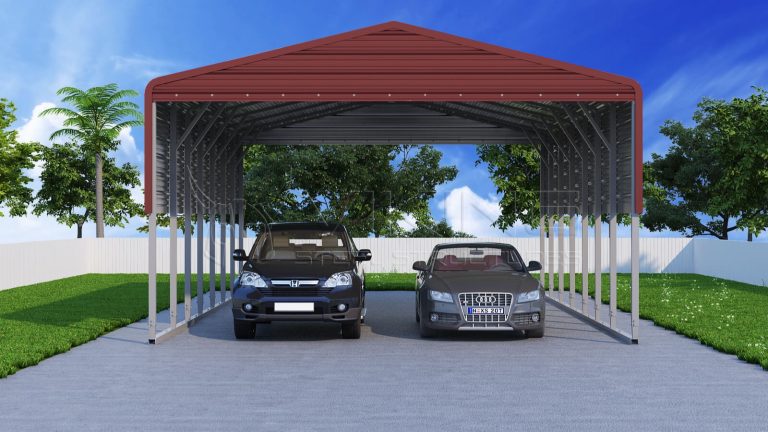
Looking for a metal building that fits your needs?